
Proper attic ventilation keeps heat and moisture from getting trapped where they can damage the roof system. Air needs a clear path through the attic, with enough intake and exhaust to keep it moving consistently.
In Martin County and Palm Beach County, we often find attics with too little intake, too little exhaust, blocked soffit vents, or mixed ventilation systems that create dead-air areas. We also see lower-quality ridge vents that compress over time and restrict airflow. When those problems go unchecked, they can contribute to premature shingle wear, warped decking, condensation, and hotter upper floors.
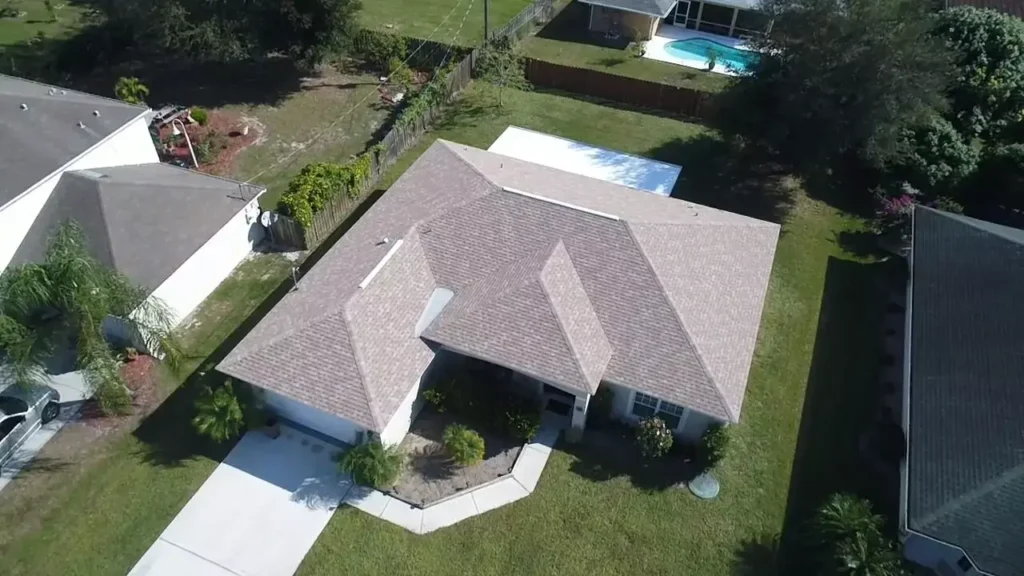
How Proper Attic Ventilation Should Work
A properly ventilated attic needs enough intake and exhaust to keep air moving without leaving large pockets of trapped heat and moisture. In many homes, air enters through soffit vents at the eaves and exits through ridge vents, box vents, or another exhaust near the top of the roof.
Gable vents can also help move air through the attic. Depending on the roof design, air may enter through one gable and exit through another, or move from a gable vent toward a higher roof vent. What matters is that the vents support the same airflow pattern instead of working against each other.
Ventilation problems usually show up when there is not enough intake or exhaust, when insulation blocks the airflow path, or when different vent types compete with each other. A good system gives heat and moisture a clear way out of the attic instead of letting dead-air areas form.
Why Poor Ventilation Causes Problems in South Florida
Poor attic ventilation allows heat and moisture to build up where they can start damaging the roof system. In Martin County and Palm Beach County, high temperatures and humidity make that problem worse for much of the year.
We often find premature shingle wear, warped decking, and signs of condensation in attics with poor airflow. We also see upper floors that stay hotter because too much heat is trapped above the ceiling.
Over time, those conditions can shorten the life of the roof and damage the decking underneath it. Proper ventilation helps move that heat and moisture out before they become larger problems.
The Ventilation Problems Whiting Roofing Finds Most Often
Most attic ventilation problems are not caused by a complete lack of vents. They happen because the system was undersized, installed incorrectly, blocked later, or pieced together without considering how air actually moves through the attic.
Not Enough Intake or Exhaust
The most common issue we find is simply not enough ventilation. Some attics do not have enough intake at the eaves, while others do not have enough exhaust near the top of the roof. Either problem can slow airflow and allow heat and moisture to build up.
Blocked Soffit Intake
A soffit vent cannot bring air into the attic if insulation is covering it from the inside. We often find this after insulation has been added if they don’t remember to keep the intake openings clear.
This is one of the key components we check during an inspection, we check the soffits from inside the attic and look at the baffles to make sure air can actually move past the insulation.
Mixed Ventilation Systems
We also find roofs where different vent types were added over time without a clear plan. Ridge vents, box vents, gable vents, and powered fans can all affect how air moves through the attic.
When those systems compete with each other, air can take the easiest route instead of moving through the areas that need ventilation. That can leave sections of the attic with little or no airflow.
Roof Sections That Were Never Properly Vented
Complex roof designs can create another problem. A main attic may be ventilated correctly while a turn gable, addition, or separate roof section gets very little airflow.
This is why we inspect each section of the roof separately. One area may have enough ventilation while another has very little airflow.
Collapsed or Low-Quality Ridge Vent
We sometimes find ridge vents that were installed correctly but no longer perform as intended. Lower-quality products, such as rolled ridge vents, also known as mesh ridge vents, can compress beneath the ridge cap and restrict airflow.
The vent may still be visible from the roof, but that does not mean it is providing enough exhaust. We look at the actual product, the opening beneath it, and its rated NFVA to determine how much airflow it can provide.
How Much Attic Ventilation Does Your Roof Need?
There is no single number of vents that works for every roof. The amount depends on the attic size, the roofing system, and the NFVA of the products being installed.
1. Measure the Attic
We start by measuring the attic floor area. That tells us how much total ventilation the roof needs based on Florida Building Code and manufacturer requirements.
2. Check the NFVA of Each Vent
Every ventilation product moves a different amount of air. We check the net free ventilation area, or NFVA, for each product being considered, including:
Ridge vents
Box vents
Soffit vents
Other intake or exhaust vents
3. Calculate Intake and Exhaust
Once we know the attic size and the NFVA of each product, we can calculate:
How much intake is needed
How much exhaust is needed
How many vents are required
Where those vents should be placed
Two homes with the same attic size may need different vent layouts because the products themselves have different NFVA ratings.
The bottom line is simple: you cannot accurately determine how many vents a roof needs until you measure the attic and run the numbers for the specific ventilation products being used.
How Whiting Roofing Inspects Attic Ventilation
We do not judge ventilation by counting vents from the ground or looking at the roof alone. Some of the biggest problems are only visible from inside the attic.
- We check soffit vents from inside the attic. Our crews walk through the attic with the lights off and look for daylight coming through the intake vents where it should. If we cannot see light in certain areas, insulation or another obstruction may be blocking airflow.
- We inspect ridge ventilation from both inside and outside. Inside the attic, we walk the ridge line and check that the opening is clear. We also inspect the vent from the roof to see how well it is holding its shape. We have found that a ridge vent can look fine from outside while still being blocked or restricted underneath.
- We calculate ventilation using the actual NFVA of the products installed. Ridge vents, box vents, and soffit vents can all move different amounts of air. We use the product specifications instead of assuming one vent performs the same as another.
- We inspect each roof section separately. Turn gables, additions, hips, and cathedral ceilings can have different airflow needs. Some turn gables are completely separated from the main attic, while cathedral ceilings may have very limited space for air to move. Those areas often need their own ventilation plan.
- We look for vent systems that compete with each other. A home may have soffit-to-ridge ventilation while also using gable vents or another exhaust system. In the wrong layout, air can take the shortest path between vents and leave other parts of the attic with very little airflow.
Choosing the Right Ventilation System for Your Roof
The right ventilation system depends on the roof design, attic size, and how much intake and exhaust the home needs. We calculate the required NFVA, then choose the vent products that can provide the airflow the roof actually needs.
Ridge Vents
When the roof has enough ridge length, ridge vent is usually our first choice. It provides continuous exhaust along the highest point of the roof and gives rising hot air a direct way out.
We also pay attention to the product quality. Lower-quality rolled or mesh ridge vents can compress over time and restrict airflow, even when they still look fine from the roof.
Box Vents
Box vents are useful when there is not enough ridge length for ridge ventilation. We see this often on hip roofs, where the peak may be too short to provide enough exhaust.
They can also be a good fit in higher-wind areas when the specific product meets Florida approval and installation requirements. The number and placement depend on the attic size and the NFVA of the vent being installed.
Attic Fans
Attic fans can help on certain roof designs, but they are not a universal fix. If the attic does not have enough intake, a fan may create another airflow problem instead of solving the original one.
Gable Vents
Gable vents can work well when they are part of a properly planned system. Problems usually happen when they are mixed with soffit-to-ridge ventilation or other exhaust methods without considering how the airflow will change.
A Real Example of Poor Ventilation Shortening Roof Life
We were called to inspect a Florida home with architectural shingles on a hip roof. The roof had very little ridge length, but the ventilation system had not been designed to make up for that limited exhaust area.
The attic was holding too much heat, and over time that heat started taking a toll on the shingles. By the time we inspected the roof, the shingles were brittle, losing granules, and aging much faster than they should have.
Based on the age of the roof, the shingles should have had roughly another 15 years of useful life. Instead, the damage was already too advanced, and the roof needed to be replaced.
The problem was not that the shingles were inherently bad. The ventilation system was not giving the attic enough exhaust for the roof design. On a hip roof like this, properly sized box vents or another exhaust strategy would have been a better fit.
Signs Your Roof Ventilation Is Not Working
Ventilation problems can show up in the attic, on the roof, or inside the home. Common warning signs include:
- Premature shingle wear, including brittleness, cracking, or heavy granule loss. In severe cases, the fiberglass mat may become visible.
- Warped or damaged roof decking, which may appear as delaminating wood or a visibly wavy roof surface.
- Condensation inside the attic, often seen as rust on the tips of roofing nails. Rust limited to the nail tips may point to condensation, while a fully rusted nail may suggest a leak.
- Upper floors that stay hotter than the rest of the home.
- Attic areas that remain excessively hot after sunset.
- Sections of the roof aging faster than others, which can point to uneven airflow.
These signs do not always mean ventilation is the cause, but they are good reasons to have the attic and roof system inspected.
When Ventilation Can Be Fixed Without Replacing the Roof
A ventilation problem does not always mean the roof needs to be replaced. If the roofing materials are still in good condition, we can often improve airflow by opening blocked intake, replacing damaged vents, or correcting a poorly designed vent system.
We often handle ventilation as a repair when homeowners notice hot upper floors, excessive attic heat, or moisture concerns. The goal is to correct the airflow before heat or moisture causes permanent damage to the shingles or roof decking.
Ventilation During Roof Replacement
A roof replacement is one of the best times to correct ventilation problems because the roof system is already being opened up. When installing a roof, we’ll review the existing setup and make any needed changes so the new roof has the intake and exhaust it needs to perform properly.
The ventilation plan may also change depending on the roofing material being installed. If you are considering tile roofing, it is worth understanding how that system affects the overall roof design before replacement.
If the roof is already near the end of its service life, our guide on how much it costs to put a new roof explains the main factors that affect replacement pricing.
How Ventilation Can Affect Roofing Warranties
Proper attic ventilation can affect roofing warranty coverage. If inadequate ventilation causes excessive heat or moisture to damage the shingles, the manufacturer may treat the problem as a ventilation or installation issue rather than a material defect, which can limit or void coverage.
FAQs
Ridge Vent vs. Attic Fan, Which Is Better?
Neither one is automatically better. Ridge vent is usually our first choice when the roof has enough ridge length because it provides continuous exhaust along the peak without relying on a motor.
Attic fans can make sense when the roof design limits passive exhaust or when additional airflow is needed. The deciding factor is the entire ventilation system. A fan will not fix poor intake, blocked soffits, or an undersized vent layout.
Can poor attic ventilation shorten shingle life?
Yes. Excessive attic heat can cause shingles to age faster, become brittle, and lose granules sooner than expected. We have inspected roofs where poor ventilation contributed to shingles wearing out years before they should have.
How do I know if my attic ventilation is properly balanced?
The only reliable way is to measure the attic, calculate the required ventilation, and compare that with the NFVA of the intake and exhaust products installed. We also check whether the airflow paths are clear and whether every section of the attic is actually being ventilated.
Get Your Attic Ventilation Checked
The Whiting Roofing company have more than 40 years of experience serving Martin County and Palm Beach County. We are a TAMKO Gold Certified Roofing Contractor, BBB A+ rated, and a member of the National Roofing Contractors Association.
If your attic is holding heat or moisture, we can inspect the ventilation system and recommend the right repair or upgrade for your roof.