
A silicone roof coating can be a smart way to renew an aging roof, reduce leak risk, and delay full replacement, but only when the existing assembly is still a dependable base. Many owners hear that a silicone roof can be installed on top of the old roof and assume the process is simple. In reality, performance depends on moisture conditions, substrate stability, compatibility, and prep quality. When those pieces are handled correctly, a silicone roof system can extend service life and improve day-to-day reliability.
This guide explains when coating over an old roof makes sense as a roof restoration strategy, when it is risky, and what must happen before any product goes down.
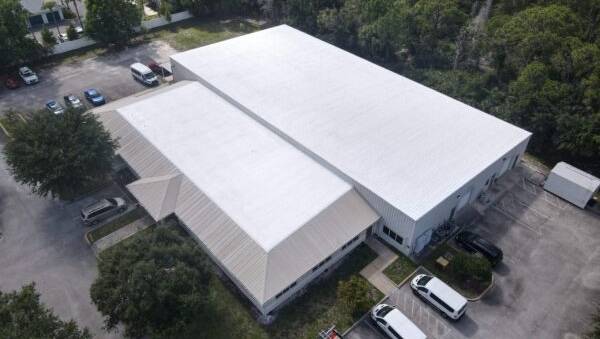
What Coating Restoration Can and Cannot Do
Silicone roof coatings involve coating a fluid-applied membrane designed to protect and renew the roofing surface. Once cured, it creates a seamless waterproof layer that resists UV exposure and typically performs well in ponding-water areas, which is why it is common on low-slope commercial buildings.
What it cannot do matters just as much. It is not a structural repair, and it cannot fix saturated insulation, damaged decking, or attachment failures. It is a coating system that relies on the condition of what is beneath it. If the base roof is failing at a structural level, covering it is not a solution.
Can a Silicone Roof Coating Go Over Any Roof?
Sometimes, yes, but not just because the roof is still there. A silicone roof works best when the roof system underneath is still holding together the way it should. That means the insulation is dry, the seams are still intact, the flashing details are not failing, and the existing surface still has enough strength to accept a coating.
This is why age by itself does not tell you much. An older roof, including an old TPO roof, may still be a solid coating candidate if the membrane is stable and the system has not taken on moisture. A newer roof can be the wrong fit if water has gotten into the insulation, seams are pulling apart, or the roof surface is breaking down. Before a silicone roof is installed, the existing roof needs to be checked for moisture, weak areas, and whether the coating will actually bond the way it should.
Old Roofs That Are Poor Candidates
Some existing roof systems should not be coated until major corrective work is completed, and in certain cases, replacement is the better outcome. Roofs with widespread wet insulation, chronic leaks from multiple sources, severe membrane splitting, unstable flashings, or failing perimeter details are usually poor candidates. The same caution applies when the roof cannot reliably hold repairs, because the finish layer cannot compensate for movement, separation, or underlying deterioration.
This is where marketing claims can get owners into trouble. Some assume a silicone coating can be applied to virtually any existing roof, but that is not a safe assumption.

The Biggest Deal Breaker: Moisture in the Roof System
Moisture trapped within the assembly is the most common reason a project underperforms. If water is already inside the roof, sealing the top can lock in that moisture and accelerate deterioration of insulation, fasteners, and deck components. The roof may look improved from above while conditions worsen below.
A professional evaluation should include moisture diagnostics before the scope is finalized. Depending on the building, contractors may use infrared scanning, moisture meters, and selective core cuts to confirm whether wet areas exist and how extensive they are. If moisture is localized, targeted tear-out and replacement can often restore coatability. If saturation is widespread, a coating approach may no longer be technically sound.
Compatibility: What Silicone Can Go Over
Silicone coatings can go over a wide variety of roof systems, but it is best not to assume every roof is compatible. Each roof should be evaluated using the coating manufacturer’s guidelines, proper cleaning standards, and field adhesion testing.
- Over existing silicone: Often feasible when the surface is properly cleaned and prepared.
- Over acrylic or polyurethane: Sometimes workable, but it depends on adhesion results and may require primer.
- Over asphaltic systems: May require bleed-blocking primer to prevent staining and bond issues.
- Over single-ply membranes: Requires strict prep and test patches because contamination and membrane condition vary.
- Over metal: Silicone performs well when rust is addressed, fasteners are secured, and seam work is completed first.
If you are evaluating multiple roofing systems across a portfolio, treat compatibility as a testable requirement, not a guess.
How Long Roof Restoration Coatings Last
Service life depends on substrate condition, prep quality, installed thickness, exposure, drainage behavior, and maintenance. When properly designed and applied, a silicone roof coating can deliver meaningful life extension. One of the greatest advantages of a silicone roof restoration is that it can easily last another 10 years. Many systems can also be recoated at the end of their cycle rather than fully removed.
Owners should still plan for periodic inspections and routine maintenance. No roof coating is truly maintenance-free, but well-built systems can be maintenance-efficient and predictable.
Common Mistakes When Coating Over an Old Roof
Most early problems with roof coatings come from a few common mistakes. One of the biggest is skipping moisture testing, which means making sure there are no active leaks allowing water to sit inside the roof system. Another is coating over weak areas, like loose seams, damaged roof surfaces, or old material that has become too brittle to give the new coating a strong grip. Applying too little coating, or not following the manufacturer’s required thickness, can also reduce waterproofing and shorten the life of the system. Problems also show up when details around penetrations and transitions are not sealed the right way, especially on larger commercial roofs. These issues can usually be avoided when the contractor treats the project like a full roof system, not just a quick cover-up.
When Replacement Is the Better Decision
Replacement is often the better decision when structural components are compromised, insulation is broadly saturated, leak pathways are systemic, or code-related upgrades make re-roofing more practical. Replacement can also be the right move when the roof has reached a condition where repeated repairs and coating attempts create recurring risk instead of predictable performance.
A qualified contractor should be willing to recommend replacement when it is the best technical choice, even if it is not the easiest sale.
Roof Condition Checklist Before Any Coating Work
Before any coating work begins, the roof needs to be evaluated as a full system, not just looked at from the surface. A proper inspection helps determine whether the roof is actually a good candidate for restoration or if there are underlying issues that need to be fixed first. This is where an experienced contractor separates normal aging from real performance risks and builds a coating plan based on the actual condition of the roof.
- How the roof drains and where water tends to collect
- Areas with ponding water or chronic low spots
- The condition of seams, laps, and exposed fasteners
- Flashing details at penetrations, edges, curbs, and transitions
- Surface contamination from dirt, oils, or previous products
- Signs of trapped moisture, soft areas, or hidden damage
- Whether the existing roof surface is stable enough to accept a coating
FAQ
Can a coating stop active leaks?
Active leaks must be traced and repaired first before applying any type of roof coating. Putting a coating over an unknown leak path is not a reliable way to fix the problem.
Does silicone coatings handle ponding water?
Yes, silicone coatings generally handle ponding water better than many other roof coatings. They are commonly chosen for low-slope roofs because they resist long-term moisture exposure and can hold up in areas where water sits after rain. Some manufacturers specifically position silicone as the better fit for roofs with poor drainage or recurring ponding, while acrylic coatings are often flagged as a weaker choice in those same conditions.
Is primer always required with coatings?
Not always. It depends on the roof surface, the condition it is in, and what the adhesion testing shows. Some roofs can accept a coating without primer, while others need primer to improve bond strength, control bleed-through, or help the coating stick properly.
What weather conditions are needed for a roof coating?
Roof coatings need dry conditions, a clean dry roof surface, and temperatures that fall within the manufacturer’s application range. You also want enough time for the coating to cure before rain, heavy dew, or cooler overnight conditions hit the roof. Humidity, surface temperature, and weather changes matter too, because even if the air feels fine, the roof itself may still be too wet or too hot for a good application. The safest answer is that coating work should only be done when the forecast is stable and the product requirements are fully met.
Get a Professional Roof Coating Assessment
Putting silicone coatings on old roofs is not something just anyone can do properly. It takes real experience to know whether the roof is dry enough, stable enough, and worth restoring in the first place. With more than 40 years of roofing experience, Whiting Roofing knows how to inspect low-slope systems, identify hidden problems, make repairs before coating, and install a silicone roof system the right way with in-house crews. If you want a coating restoration plan based on real roof conditions, not a sales pitch, contact Whiting Roofing for a professional assessment.