
White silicone roof coatings are a practical way to extend the life of flat and low-slope roofs. Most people researching this topic want three outcomes: fewer leaks, lower heat gain, and a way to postpone full replacement. When the roof is a good candidate and the system is installed correctly, silicone can deliver on all three.
This guide explains the key advantages of silicone roof coatings, where they perform best, and what to evaluate before moving forward.

What Is a White Silicone Roof Coating?
A white silicone roof coating is a liquid-applied membrane that cures into a seamless, flexible layer over an existing roof. A silicone roof restoration strategy usually starts with substrate evaluation, moisture checks, and adhesion testing. That process confirms whether the existing surface is a strong candidate for a roof coating system or whether repairs are needed first.
Silicone vs. Acrylic vs. Polyurethane Performance
Different roof coatings are built for different conditions. Silicone polymer technology is superior for roofs with ponding water because it handles long-term moisture exposure well and stays stable in wet conditions. Acrylic is often the lower-cost option and reflects heat well, but it works best on roofs with positive drainage because standing water wears it down faster. Polyurethane is usually chosen when you need more impact resistance and a tougher surface for foot traffic, but it often costs more. In simple terms, silicone is best for wet flat roofs, acrylic is best for roofs that drain well, and polyurethane is best when the roof needs a harder-wearing surface.
When Coatings Are Not the Right Choice
A roof coating only makes sense when the roof is still in good enough shape to be restored. If the insulation is wet, the deck is damaged, the roof has structural issues, or the drainage problems have never been fixed, a roof coating is the wrong move. Those issues need to be dealt with first. Otherwise, you are just putting a new surface over a roof that already has bigger problems underneath.
Top Advantages
These are the benefits most owners care about when comparing roof coatings and other restoration options. A white silicone coating is not just about making the roof look cleaner. The real value is in protecting the roof surface, reducing heat buildup, and helping a serviceable roof last longer before replacement becomes necessary.
Superior UV Protection
Sun exposure breaks down every roof over time. It dries out materials, speeds up surface aging, and contributes to cracking, weakening, and loss of performance. A white silicone coating adds a protective layer that helps block that ongoing UV abuse. That extra protection can slow down wear and help the roof hold up better in harsh sun.
Reflects Heat and Lowers Roof Surface Temperature
One of the biggest advantages of a white silicone coating is its reflectivity. Instead of absorbing the sun’s heat the way darker roof surfaces do, it reflects a large amount of solar radiation away from the roof. That can lower roof surface temperatures and reduce how much heat pushes into the building below.
Strong Waterproofing and Ponding Water Resistance
One of the biggest strengths of silicone is its resistance to long-term moisture exposure. Unlike many alternatives, it generally holds up well in areas where water sits after storms. For flat and low-slope areas, ponding water is one of the most common failure triggers, and that is where silicone coatings stand out. Their waterproofing capabilities help keep the roof surface sealed even after repeated storm cycles. Compared with many traditional roof coatings, a properly specified silicone coating is designed to keep flexibility under sun exposure and repeated wetting cycles. That is one reason many contractors prefer silicone coatings for flat and low-slope areas that deal with recurring weather stress.
Extends Roof Life and Delays Replacement
If the existing roof is still in serviceable condition, a silicone coating can be a practical way to extend its life without moving straight to a full tear-off. That gives owners a chance to delay replacement, preserve capital, and get more value from the roof system they already have. Of course, that only works if the roof is a good candidate and the prep work is done right.
Seam and Fastener Reinforcement
Most leaks do not start out in the middle of the field. They usually start at seams, penetrations, flashing details, drains, curbs, and exposed fasteners. A quality coating project addresses those areas first because they are often the weakest points in the system. Reinforcing those details is a big part of what helps reduce future leak risk.
Indoor Comfort
When the roof absorbs less heat, the building usually feels the effect. In many cases, that means more stable indoor temperatures, especially on upper floors or in buildings with large open spaces directly below the roof. It is not a magic fix for every comfort issue, but it can help reduce heat load where the roof has been contributing to the problem.
Lower Maintenance Burden Over Time
A coated roof still needs inspections and regular upkeep, but maintenance is often simpler than constantly patching an older roof that keeps developing small problems. When the system is installed correctly and monitored over time, owners can often deal with fewer recurring trouble spots and a more manageable maintenance plan.
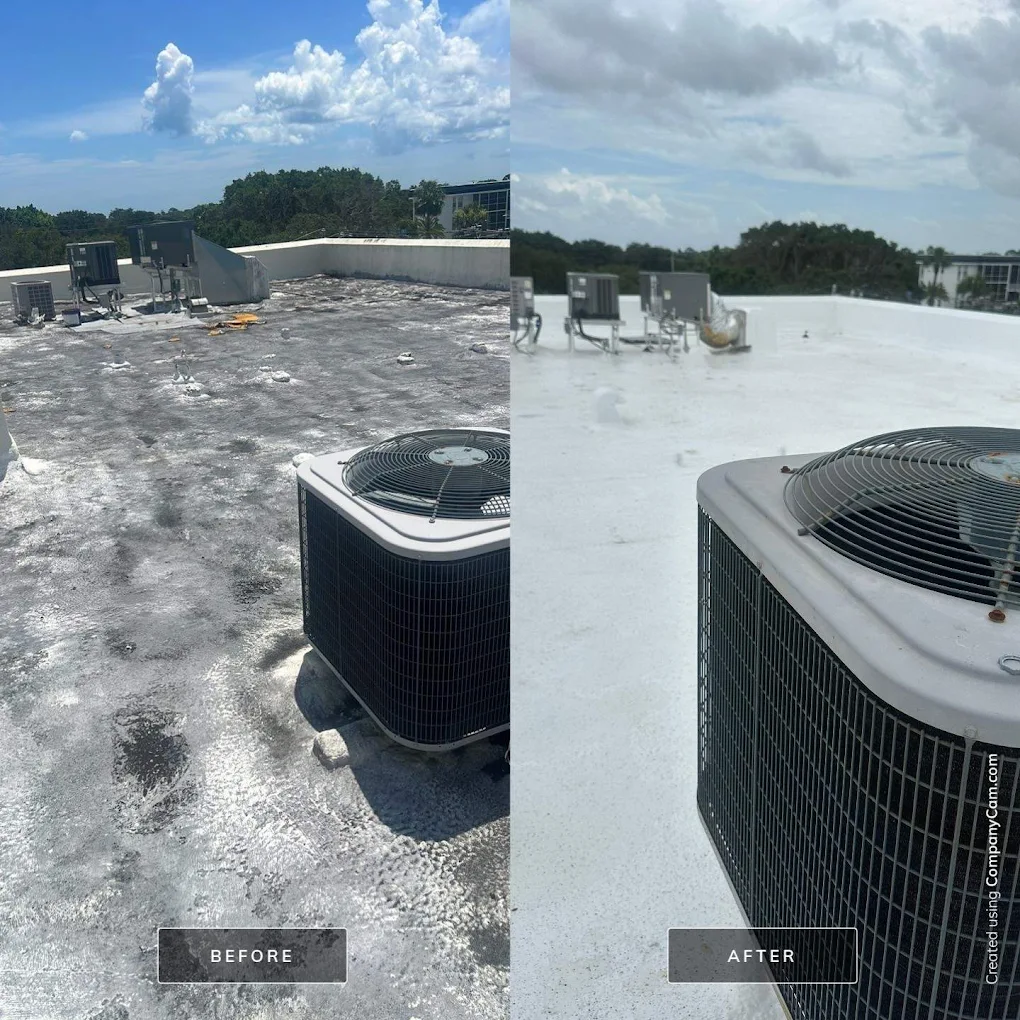
Energy Efficiency Benefits for Your Roof
One of the biggest advantages of a white silicone roof coating is how well it reflects heat. Instead of letting the roof absorb intense sunlight all day, the bright surface reflects a large amount of that heat away from the building. That helps keep roof temperatures lower, which can reduce the heat pushing into the space below.
This is one of the biggest reasons white coatings can improve energy efficiency. When less heat enters the building, the HVAC system does not have to work as hard to keep indoor temperatures comfortable. That can help lower cooling demand, support energy savings, and improve overall energy efficiency, especially on buildings with dark existing roofs and lots of direct sun exposure. The biggest savings are usually seen in warmer climates, but results still depend on things like insulation, building use, and the condition of the existing roof system.
Silicone on Roofs With Ponding Water
Ponding water is more than just a nuisance. Low-slope roofs are supposed to drain within 48 hours after rain, and when water sits longer than that, it keeps the roof materials saturated and starts wearing them down. That constant exposure can erode the surface, weaken seams and flashing, and make leaks much more likely over time.
The right long-term fix is always to correct the drainage issue by rebuilding low areas, improving slope, or making other proper drainage corrections. Still, silicone roof coatings perform very well in ponding water conditions and hold up better than many typical roofing materials and coatings when the roof stays wet for long periods. That is why it is often used on roofs with recurring ponding. While it should not be used as an excuse to ignore major drainage problems, it can help buy time, protect the roof surface, and slow down the damage that standing water can cause while you plan for a more permanent correction.
Best Roofing System for White Silicone Coating
The best candidates for white silicone coating are usually flat and low-slope roof systems like the ones below. These roof types tend to deal with standing water, heavy sun exposure, open seams, and surface wear over time. That is where silicone really shines. It is not the right fit for every roof, but on the right flat roofing system, it can help seal vulnerable areas, improve weather resistance, and extend the life of the roof without a full tear-off.
Modified Bitumen
Modified bitumen roofs often start showing age through surface cracking, worn cap sheets, seam separation, and areas that hold water longer than they should. When the roof is still dry and structurally sound, silicone can help by sealing the surface, reinforcing weak areas, and creating a watertight, highly reflective layer over the existing system. That added protection helps slow down further weathering and gives the roof a better chance of lasting longer.
Single-Ply Membranes Like TPO, PVC, and EPDM
Single-ply roofs often run into issues like open seams, shrinkage, punctures, and surface wear from years of sun and weather exposure. Silicone can be a strong solution when the membrane is still in serviceable condition and the roof is prepped the right way. It helps protect the membrane from further exposure, improves waterproofing around details, and gives the roof a reflective surface that helps reduce heat buildup. The key here is making sure the coating is matched to the membrane and applied over a properly prepared surface.
Metal Roofs
Metal roofs usually have trouble spots at seams, fasteners, penetrations, and areas where rust starts to form. They also absorb a lot of heat in direct sun. Silicone helps solve both problems. It can seal over fasteners and joints where leaks often begin, and it adds a reflective surface that helps reduce heat gain across the roof. On the right metal roof, that can mean fewer leak problems and better long-term performance.
Spray Foam Roofs
Spray foam roofs are a different story because silicone is not just a good option for them. It is the ideal coating for maintaining that type of roof. SPF depends on a protective coating layer to shield it from UV rays and moisture. Without that coating, the foam will wear down and fail much faster. Silicone helps protect the foam, preserve the roof system, and extend its service life. When an SPF roof is maintained the right way with silicone recoats over time, it can keep performing for many years without needing a full replacement.
Roof Coating vs. Replacement
When owners compare replacement against restoration, they are usually comparing lifecycle cost, disruption, and risk. In many cases, modern roof coatings give commercial properties a practical way to extend service life while preserving capital for other building priorities. For many commercial properties, a silicone roof coating is a cost-controlled alternative when the deck and insulation remain stable. In these cases, silicone roof coatings and other coatings can delay capital replacement and help operators plan phased upgrades across each building. Coating is often less expensive than replacement because it can avoid tear-off, disposal, and major operational disruption. Still, if the substrate is failing, replacement may provide better long-term economics.
Common Questions About White Silicone Roof Coatings
Is Silicone Slippery?
It can be. A silicone-coated roof can feel slick, especially when it is wet from rain, dew, or humidity. That matters any time service techs, maintenance crews, or roofing workers need to walk the roof.
This is why we often recommend walkway pads in areas that get regular foot traffic. They give people better traction and help protect the coating from wear in the same paths over and over again. On most roofs, that includes areas near HVAC units, access points, and service routes. The goal is not just to make the roof safer to walk on. It is also to help the coating last longer in the areas that take the most abuse.
Can Silicone Be Applied Over an Existing Coating?
Sometimes, yes, but this is not something you want to guess on. The existing coating has to be checked first to make sure the new silicone will actually bond to it.
That usually means looking at the roof’s condition, identifying what product is already on the surface, and doing adhesion testing before any full application begins. We take this seriously because one of the fastest ways to ruin a coating job is to apply a new product over a surface that was never prepared correctly or was never compatible to begin with.
When the roof is a good candidate, silicone can often be installed over an existing coating and be a great way to avoid a more expensive tear-off. But the roof has to earn that answer first. Proper prep, testing, and product selection are what make that possible.
Do Silicone Roof Coatings Stop Leaks Immediately?
Not by itself. Silicone can seal vulnerable areas once it is installed and cured, but it is not magic, and it should not be treated like a shortcut.
If a leak is coming from an open seam, failed flashing, a damaged penetration, or wet roofing materials below the surface, those problems still need to be found and addressed the right way. A coating is part of a restoration system. It is not a substitute for proper leak diagnosis.
This is where experience matters. A good contractor does not just look at the stain inside the building and start coating the roof. They inspect the actual source of the leak, repair the problem areas, and then determine whether the roof is still a good candidate for silicone.
Can You Coat a Roof If It Has an Active Leak?
In most cases, no, not until the leak is repaired first. If the roof is actively leaking, coating over it is usually the wrong move.
The problem is that the leak you see inside the building is often only the symptom. The real issue may be a split seam, deteriorated flashing, damaged membrane, or trapped moisture in the roof system. If that area is not repaired first, the coating may cover the surface without fixing the actual failure underneath.
That is why the right process starts with repairing the damaged section, checking for moisture, and making sure the roof is dry and stable before coating begins. When that step is skipped, the coating is much more likely to fail early, and the owner ends up paying twice for the same problem.
Get a Free Roof Coating Assessment
For more than 40 years, Whiting Roofing has been applying silicone roof coatings across Florida. That experience matters because a coating system only works when the roof is inspected properly, repaired where needed, and installed by a team that knows what to look for. With in-house crews, the ability to make repairs before coating, and warranty-backed systems, Whiting Roofing has the experience and expertise to do the job right. Contact us for a free assessment and find out if your roof is a good candidate.