
A roof leak often starts long before water drips from the ceiling. It may first show up as a damp patch in the attic, a damaged shingle, or a change along the roof edge. Knowing these early signs can help you catch a problem while a targeted repair is still possible.
Some clues are easy to miss. We look for both visible signs of roof damage and the subtle signs that show where water has traveled beneath the roofing materials.
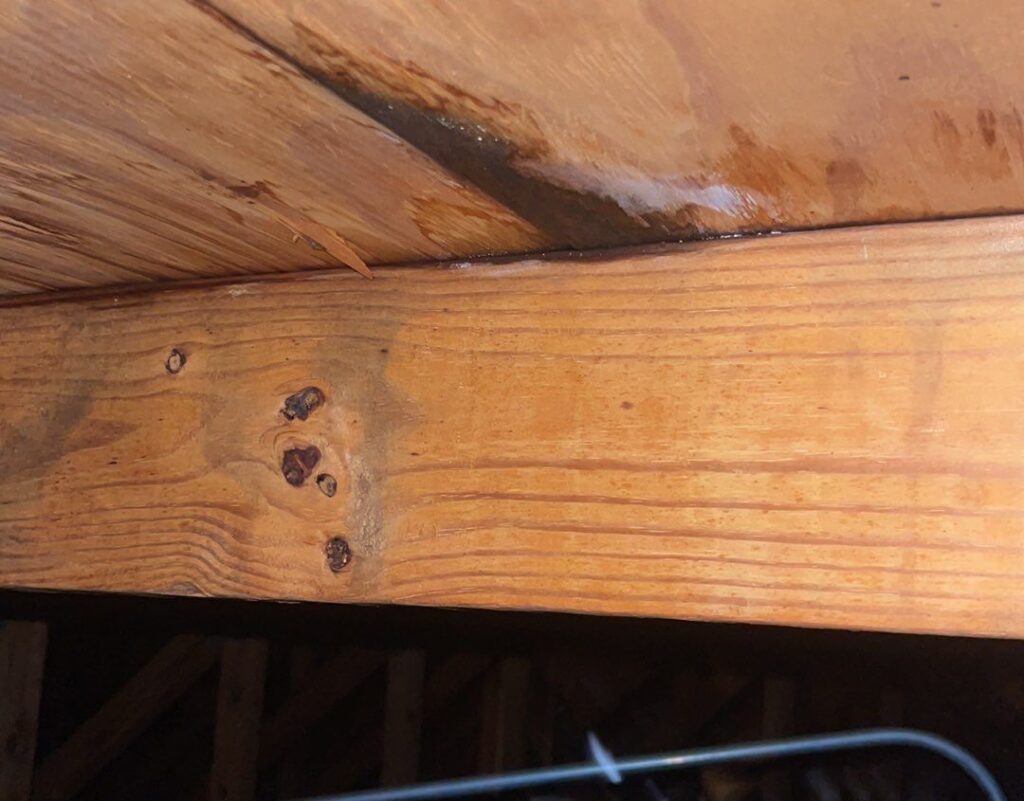
1. Check Inside the Attic After a Long Rain
If your attic is safely accessible, check the attic first when you suspect a leak but cannot see an obvious problem outside. Wait until rain has been falling for a while, or look shortly after it stops. Some roof leaks take time to pass through the roofing layers and reach the attic.
Use a flashlight and stay on a secure walkway or framing. Never step between ceiling joists. During an attic inspection, look for the following clues.
Damp or Compressed Insulation
Wet insulation may look darker, feel damp, or appear compressed compared with the material around it. Water can travel along the decking or framing before it drips, so the wet spot may not be directly below the opening in the roof.
Rust on Fasteners or Metal Components
Rust on nails or metal connectors can show that moisture has reached the attic more than once. A few rusty nail tips do not necessarily indicate a roof leak. Widespread rust limited to exposed tips may point to condensation, while rust accompanied by a trail down the decking may help us trace water entering from outside. If rust appears mainly on exposed nail tips throughout the attic, condensation may be contributing to the moisture problem. More signs of poor roof ventilation include trapped heat, musty odors, and premature shingle aging.
Water Stains on the Roof Decking or Trusses
Look for dark streaks or water stains on the underside of the decking and along rafters or trusses. A brown stain can remain after an old leak has been repaired, so photograph it and see whether it changes after the next rain. New dampness is more useful evidence than color alone.

2. Get a Yearly Roof and Attic Inspection
We recommend a yearly roof inspection, ideally after storm season or in the fall. It gives us a chance to find newly damaged shingles or tiles, examine flashing and penetrations, and clear debris from gutters and drainage areas.
We also look for excess granule loss, loose materials, and earlier repairs that may need attention. If a major storm passes through or you notice new warning signs, do not wait for the yearly visit. An inspection should end with a clear explanation of what needs repair, what needs maintenance, and what can simply be monitored.
Assuming a roof is fine because it looks undamaged or is still under warranty can cause homeowners to overlook early leak warning signs. These are some of the roofing myths homeowners should know before deciding their roof does not need an inspection.
3. Watch for Damp Soffit, Fascia, or Trim
Not every leak reaches the inside of the house. Water can enter near the roofing edge and damage the overhang instead. When you walk around your property, look for peeling paint, soft fascia, damp trim, or dripping from a soffit during rain.
We have seen water enter at the edge, travel through the overhang, and come out through the soffit. A backed-up gutter can also send water where it does not belong. These warning signs deserve attention even when the rooms inside are dry.
4. Look for Roof Changes From the Ground
After a storm, walk around the property and look up without climbing onto the roofing. Missing shingles, a slipped tile, displaced ridge materials, or loose flashing can leave an opening for rain.
Look for sagging or buckling, too. Rain entering around a vent can rot the wood beneath the roofing. As the decking weakens, the opening may grow. Binoculars or a zoomed-in phone photo can help you record a change safely from the ground.
Tools and Methods for Detecting Leaks
A visual inspection is our starting point. We compare interior marks with the attic, roof surface, penetrations, and drainage areas. Binoculars help us examine details from the ground. A moisture meter can help determine whether an old-looking mark is currently damp.
When the source remains unclear, we may conduct a controlled water test, applying water to one suspected area at a time while someone watches inside. We follow the direction rain would naturally flow. Spraying upward beneath shingles or roof flashing can force water into places it would not normally reach and produce a misleading result.
Roof Areas Most Likely to See Leaks
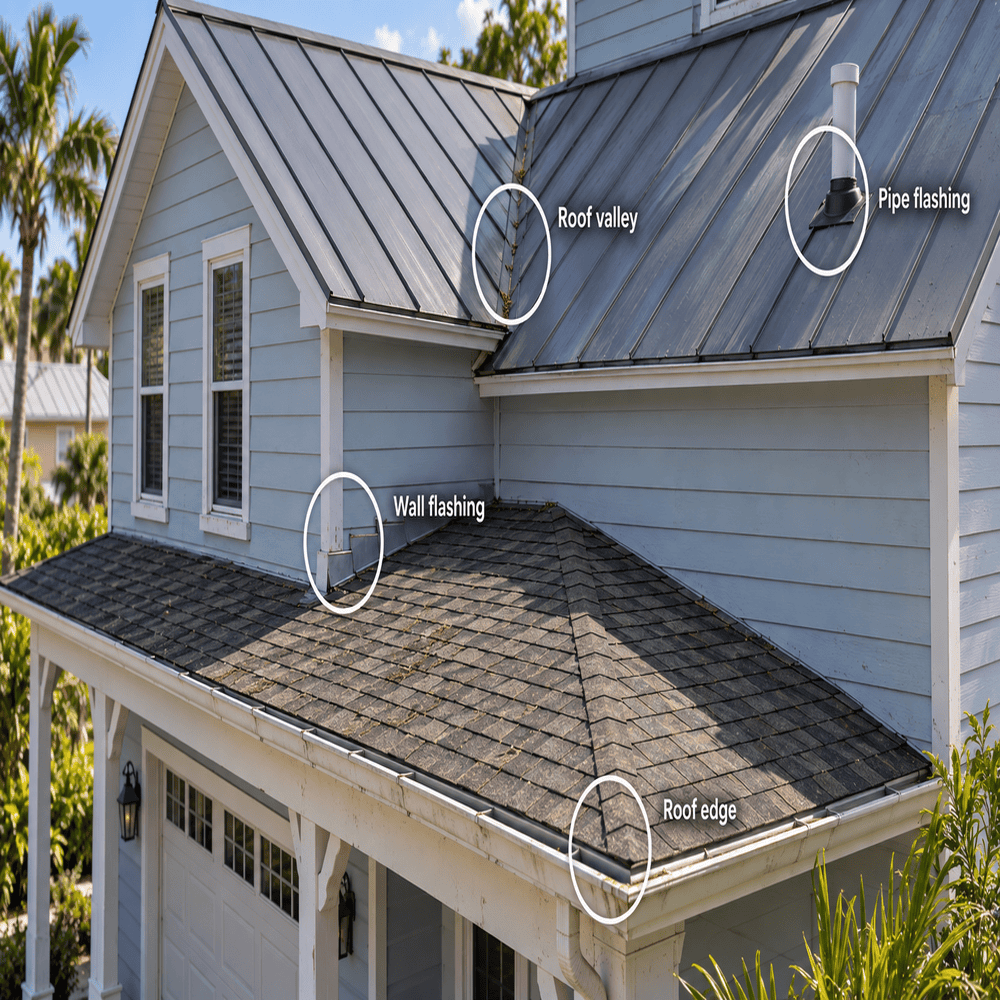
We pay close attention to transitions and openings: flashing where walls meet a roof slope, valleys, pipe boots, vents, and skylights. Roof edges and gutters matter as well because water that gets behind the edge can damage the fascia and soffit.
A mark on the ceiling does not necessarily sit directly below the defect. Rain may enter higher up, follow the decking or framing, and appear somewhere else.
Other Problems That Can Look Like Roof Leaks
Finding water indoors does not always mean the roof covering has failed. We check other possible sources before recommending a roofing repair.
Plumbing: A pipe running through the attic can leak. We have also seen warm, moist air from an exhaust duct condense against a cooler roof vent component, then drip back into the house.
HVAC equipment: An attic air conditioning unit may have an overflowing drain pan or a blocked condensate line. The resulting interior damage can look much like a leaking roof.
Windows and siding: Water can enter around a window or behind siding, then appear in a room below. We see this possibility where a lower garage roof meets the taller wall of the main house.
Skylights: Moisture may enter through the skylight assembly, including a failed seal around the glass, rather than through the adjacent shingles. Its flashing is another possible source.
Chimneys: We check the chimney cap, flashing, and masonry. Moisture can enter at the top or through deteriorated masonry and appear inside some distance from the original roofing opening.
What to Do When You Notice Early Warning Signs
Take Pictures
Photograph the affected area before it changes. Include one wide image showing its location and a close-up of the water stains or damp material. New photos after another rain can show whether the problem is spreading.
Keep Track of the Weather and Date
Write down when you first noticed the problem and what the weather was doing. Leaks that appears only during wind-driven rain may have a different source from one that appears after hours of steady rainfall. Details like these help a contractor narrow the search.
Protect the Interior
Move belongings away from the wet area and catch dripping water if it is safe. Yellow ceiling stains may be an early clue, but a swollen or sagging area needs prompt attention. If water is near electrical fixtures, avoid the area and get qualified help.
Avoid Temporary Patches That Hide the Source
A patch in the wrong place can make roof leaks harder to trace. Roof cement or a coating may cover a visible gap while water continues entering elsewhere. In some cases, sealing the wrong area redirects water into another part of the assembly.
If the problem is active, call a roofing contractor about appropriate temporary protection. The permanent repair should address the entry point and any materials damaged beneath it.
FAQs
How Do I Know if a Leak Is Coming From My Roof or Somewhere Else?
We follow the evidence. Damp materials, rust, and staining may help us trace water toward an opening. We also check plumbing, HVAC equipment, windows, and siding. Fresh leaks may leave few clues, which is when an experienced contractor and a controlled test can be especially helpful.
Will a Roof Leak Stop on Its Own?
It may stop dripping when the rain stops, but the opening usually remains. Some roof leaks appear only during prolonged rain or when wind pushes moisture in a particular direction. Do not assume the problem has gone away because the ceiling dried.
How Often Should a Roof Be Inspected for Leaks?
Once a year is a practical starting point for many Florida homes. Schedule another inspection after a significant storm or when you see new warnings. An older roof or one with a history of leaks may need closer attention.
Schedule a Professional Roof Inspection
If you have notice staining, a damp soffit, or a change in your roof, a roofing company can help find the source. The earlier we inspect an active roof leak, the better our chance of limiting damage to insulation, decking, and interior finishes. At Whiting Roofing, we start with the visible symptom, examine accessible interior and attic areas, and work outward to the roof details that could be allowing water in. We have over 40 years of experience providing leak detection, roof inspections, and repairs for homeowners and commercial businesses across our Florida service area. We inspect the evidence, explain what we found, and recommend a repair based on the cause. Our National Roofing Contractors Association membership and A+ rating with the BBB provides our customers confidence in our workmanship. Contact us today to schedule an inspection before a small leak becomes a larger problem.