
A very hot attic is common in Florida, but heat alone does not tell us whether the roof is ventilated properly. We look for a pattern: trapped heat, recurring moisture, blocked airflow, and roofing materials aging sooner than expected. Those clues help us determine whether ventilation is the problem or whether something else, such as a roof leak or inadequate insulation, needs attention.
What Is Attic Ventilation and Why Does It Matter?
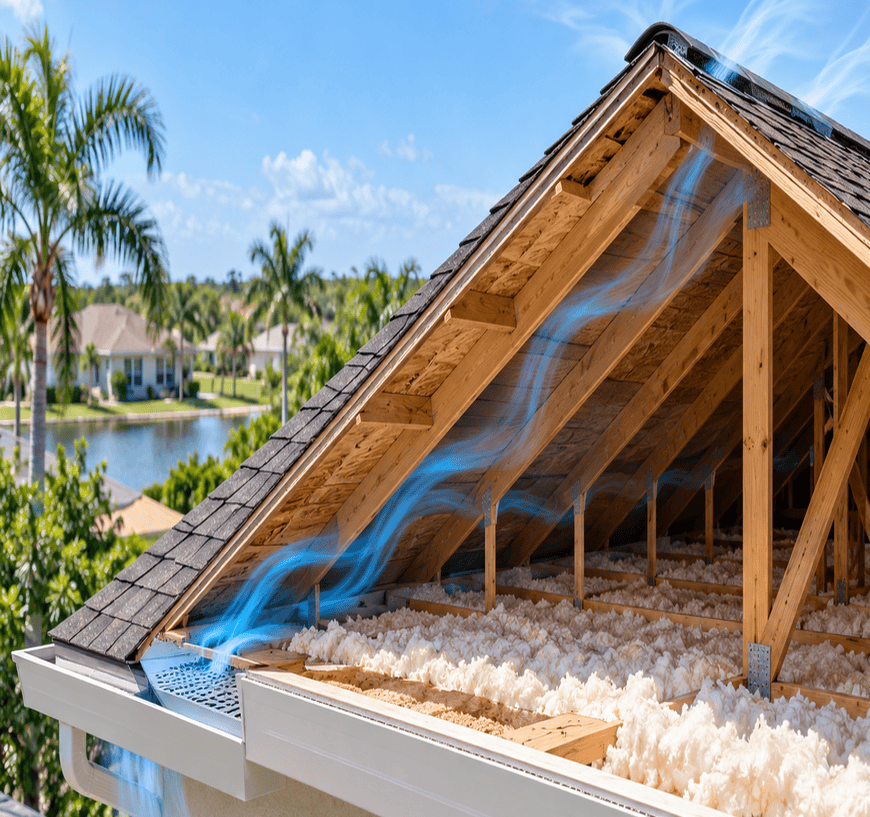
Attic ventilation is the movement of outdoor air through the space between the ceiling and the roofing deck. In a traditional vented attic, it helps release accumulated heat and moisture. That matters in Florida, where roofs receive intense sun and air conditioning systems work hard for much of the year.
Ventilation is only one part of the system. Insulating the attic slows heat transfer into the home, while air sealing limits the movement of conditioned air and moisture through gaps in the ceiling. Adding vents will not correct all comfort or moisture issues if those other parts are missing.
How Does Proper Roof Ventilation Work?
Most traditional vented attics need a path for air to enter low on the roof, often through soffit vents, and leave higher up through ridge vents or another suitable exhaust vent. The openings must provide enough usable airflow, and insulation cannot block the intake at the eaves.
The amount of ventilation is based on the attic’s size, the vents’ net free vent area, and how intake and exhaust are distributed. A roof with dormers, separate attic spaces, or complicated slopes may need more than one ventilation approach. We assess the layout before recommending another vent or fan.
Top Signs of Poor Ventilation
These are the common issues we find during roofing inspections that indicate poor ventilation.
Your Attic Feels Like an Oven
Florida attics get hot, especially in the summer. It’s concerning when your attic feels like an oven regularly and the heat appears trapped, especially when intake vents are blocked or the attic has little effective exhaust. Heat can add to the load on the rooms below and expose roof materials to higher temperatures.
We do not diagnose ventilation issues by temperature alone. We check whether air has a clear path through the attic and whether insulation and air sealing are also contributing to the heat you feel inside.
Rust on Nail Tips or Metal Fixtures
Moisture can leave clues on the underside of roofing. One or two rusty nails may mean little, but widespread rust on the exposed tips of nails in an attic area can suggest recurring condensation.
A roof leak can also rust nails and stain the decking, so the pattern matters. Rust along a nail’s length, nearby water stains, or damage concentrated below a roof detail may point us toward water entering from outside. Rust limited mainly to exposed nail tips across a broader area may point toward moisture collecting inside the attic. We inspect both possibilities before calling it a ventilation issue. Because attic moisture can come from condensation or water entering through the roof, it helps to know which clues to watch for. Find out how to spot roof leaks early by considering damp insulation, water stains, and changes after rainfall.
Musty Odors or Visible Mold in the Attic
We have opened attic hatches and noticed a musty smell that was not apparent anywhere in the home. That odor, visible mold, or damp roof decking tells us moisture needs to be investigated.
Poor ventilation is one possible cause. A roof leak, disconnected bathroom exhaust duct, air leakage from the living space, or condensation on air conditioning ducts can produce similar symptoms. The remedy depends on where the moisture is coming from.
Early Curling, Peeling, or Granule Loss on Shingles
Curling edges and granule loss can appear as shingles reach the end of their useful life. When those signs develop unusually early, we look more closely at the roof’s installation, sun exposure, and attic conditions.
Ventilation problems may contribute to premature aging, but damaged shingles are not proof of poor ventilation by themselves. We need to inspect the roofing and attic together.
Upstairs Rooms That Are Hard to Heat or Cool
If upstairs rooms remain uncomfortable while the rest of the house feels fine, the attic deserves a look. Trapped heat can contribute, particularly when air conditioning ducts run through the attic.
We also check for thin or displaced insulation, gaps in the ceiling air barrier, and duct problems. Those issues can affect comfort even when the roof ventilation is adequate.
High Energy Bills
A poorly performing attic can make an air conditioning system work harder, but an unusually high bill does not identify ventilation as the cause. Equipment condition, duct leakage, thermostat settings, insulation, and air sealing can all affect energy use.
We avoid promising that adding a vent will produce a specific savings. The useful question is whether the attic has airflow issues and what else needs to be corrected for the home to perform better.
Premature Roof Aging
We have seen roofs expected to last 30 years or more need replacement around year 15 after severe attic problems contributed to premature roof deterioration. That does not mean every roof that ages early has a ventilation defect. Installation quality, material selection, storms, and maintenance also affect service life.
When roof is failing early, we want to identify why before installing a replacement. Otherwise, the new roofing could face the same conditions. If the damage is extensive enough to require replacement, your budget may need to include decking repairs and ventilation corrections alongside new roofing. Our guide about how much should it cost to put a new roof on explains these expenses and what to look for when comparing estimates.
What to Do If Your Roof Has Ventilation Problems
Start with a professional roofing and attic inspection. We check the existing intake and exhaust, look for blocked soffits, examine accessible decking for moisture, and assess the roof covering. We also consider insulation, air leaks, and any equipment or ducts in the attic.
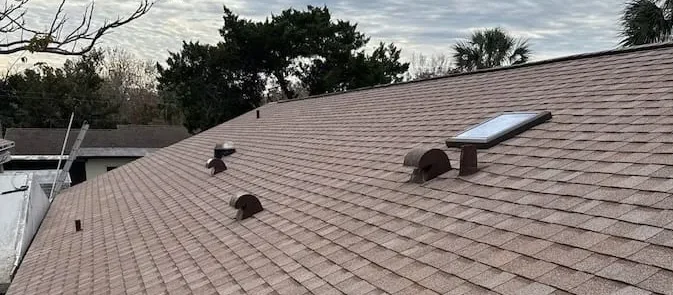
Sometimes the solution is straightforward, such as clearing blocked intake vents or adding properly sized attic ventilation. On a more complicated roof, we may need to address separate attic sections or use a combination of compatible components. Adding an attic fan is not automatically the right answer; it must fit the existing ventilation design.
What Happens if a Roof Is Not Vented Properly?
Depending on the cause and severity, poor ventilation can allow heat or moisture to accumulate in a vented attic. Over time, moisture may corrode metal, dampen insulation, or damage wood. Excessive heat can contribute to uncomfortable rooms and may be one factor in premature roof aging.
These problems usually develop gradually. Finding them early gives us a better chance to correct the cause before damaged roofing or decking needs more extensive work.
Homes With Vaulted Ceilings or No Traditional Attic
These roofs need a closer look at how they were built. Some vaulted ceilings have a designed ventilation channel between the insulation and roof deck. Others use an unvented roofing assembly, and insulating at the roof deck as part of a different approach to controlling heat, air, and moisture.
An unvented assembly is not automatically missing something. We need to identify the assembly before adding vents, because opening a roof designed to be unvented could create new moisture issues.
Poor Ventilation Can Affect Roof Warranties
Some roofing manufacturers include ventilation requirements in their installation instructions or warranty terms. If a shingle roof develops problems, those terms may affect how a claim is evaluated.
We recommend keeping the product and workmanship warranty documents and asking your contractor how the planned ventilation meets the roofing manufacturer’s requirements. The exact terms depend on the products installed; there is no single warranty rule that applies to every roofing system.
FAQs
Do Attics Always Need Ventilation?
No. Traditional vented attics need a properly designed airflow path. Some roofs are intentionally built as unvented assemblies and control heat and attic moisture differently. The first step is identifying which type of roofing you have.
How to Know if Your Roof Has Enough Roof Vents
Counting vents from the driveway will not give you a reliable answer. We need to know the attic area, the usable opening size of each vent, where the intake and exhaust are located, and whether air can move between them. Separate attic spaces may need to be evaluated separately.
We also compare the calculations with what we see: blocked eaves, widespread nail-tip rust, damp decking, and signs of premature wear. A roof can appear to have plenty of vents while still having poor airflow in the areas that need it.
How Quickly Can Poor Attic Ventilation Damage a Roof?
There is no reliable timeline. It depends on the severity of the problem, the amount of moisture entering the attic, the roofing assembly, and the materials involved. Moisture staining may appear before there is obvious damage inside the home, which is one reason an attic inspection can be valuable.
Can I Fix Poor Ventilation Myself?
A homeowner can sometimes spot an obvious issue, such as insulation covering a soffit vent. Designing the fix takes more care. Adding an attic fan to a soffit-to-ridge system, for example, can disrupt the intended attic airflow or draw air from the wrong place. Mixing roof vents without checking the intake, exhaust vents, and attic layout can leave pockets of stagnant air, or make the moisture issues worse. Minor mold spots can be treated yourself, but widespread issues should be handled by a professional.
Will Better Attic Ventilation Lower My Energy Bills?
It may help when poor ventilation is contributing to attic heat, but we would not promise a particular reduction. In Florida, we often find that the best result also requires attention to attic air sealing, insulation, and sometimes ductwork. Those measures help keep cooled air where it belongs.
How Do You Fix Poor Intake Vents?
We fix the cause we find. That could mean opening blocked intake vents, adding appropriately sized intake or exhaust, correcting a poorly matched vent setup, or addressing a separate moisture source. If the attic has wet insulation or damaged decking, those materials may also need attention. We explain the findings before recommending work.
Schedule a Roof Ventilation Inspection
If you notice signs of poor roof ventilation, including widespread nail-tip rust, a musty smell or mold, trapped heat, or shingles aging early, we can help determine the cause. As a roofing company serving Martin County and Palm Beach County for more than 40 years, Whiting Roofing evaluates attic ventilation alongside the roof’s overall condition to identify the cause. We are a TAMKO Gold Certified Roofing Contractor, hold a BBB A+ rating, and belong to the National Roofing Contractors Association. Schedule an inspection with our team for clear findings and recommendations specific to your home.