
A metal roof coating can be a smart way to extend the life of an aging roof, but only when the roof is a good candidate. Coating is not magic paint. It is a liquid-applied roof system that helps seal, waterproof, and protect the existing roof surface.
For many South Florida property owners, that matters. Metal roofs take a beating from heat, UV exposure, heavy rain, humidity, and coastal air. Over time, seams can loosen, fasteners can back out, rust can start, and small leaks can form around vulnerable areas.
When the structure is still sound, roof coating systems may help restore performance without the disruption and cost of a full roof replacement. When the roof is too far gone, coating can become a short-term patch over a bigger problem.
That is why the first step is not choosing a product. The first step is finding out whether your roof should be coated at all.
Can Your Metal Roofing Be Coated?
Not every roof is a good fit for coatings. A roof coating works best when the metal panels are still structurally sound, the roof is not severely rusted, and the main issues are surface wear, minor leaks, exposed fasteners, seam concerns, or weathering.
A properly applied metal roof coating system can often add 10 to 20 years of service life. That depends on the roof condition, product type, surface preparation, application thickness, and ongoing maintenance.
The roofing needs to be inspected first. If panels are loose, decking is compromised, rust has eaten through the metal, or water is trapped below the system, coatings may not be the right answer.
That is where experience matters. Whiting Roofing evaluates the full roof before recommending coating, repair, or replacement. The goal is not to coat every roof. The goal is to recommend the option that actually makes sense for the building.
Why South Florida Metal Roofing Wear Down
South Florida creates a tough environment for metal roofs. The roofing deals with intense sun, long rainy seasons, high humidity, and storm exposure. Coastal properties can also face salt air, which can speed up corrosion on exposed metal.
Even a quality metal roof can develop weak points over time. The most common trouble areas are seams, screws, fasteners, penetrations, flashing, and low-slope areas where water sits longer than it should.
Heat also plays a major role. Metal expands and contracts as temperatures change. That movement can stress seams, loosen fasteners, and create openings where water can enter.
Metal coatings help by creating a protective layer over the roofing material. It can reduce direct exposure to sun and moisture while helping seal vulnerable areas.
What Metal Roof Coating Actually Does
Metal roof coatings are liquid-applied sealants that cure into a protective membrane. They are designed to restore, waterproof, and protect the roof surface.
A good system can help:
- Seal seams and fasteners
- Reduce water intrusion
- Protect against oxidation and rust
- Improve reflectivity
- Reduce surface temperatures
- Extend metal service life
- Limit further weather-related wear
For South Florida buildings, reflectivity is a major benefit. White or highly reflective coatings can help reduce roof surface temperatures. That may help reduce heat transfer into the building and support better energy efficiency.
The coating also adds a new layer of protection against UV rays, moisture, and oxidation. That can be especially valuable on older metal roofs that still have life left in them.
Problems Coating Can Help Solve
Metal roof coatings are often used when a roof has started showing signs of age but does not need full replacement yet.
They can help address minor leaks around seams, screws, and fasteners. These are common failure points on metal roofs because movement and weather exposure can slowly weaken them.
Coating roofing materials can also help with surface rust when the rust has not caused major structural damage. In those cases, the roof must be properly cleaned, treated, and primed before the coatings are applied.
Coatings can also protect faded or weathered roofing panels from further exposure. That does not mean it turns a bad roof into a new roof. It means it can give a sound roof more protection and more usable life.
That distinction matters. Coatings are strongest when it is used before the roof reaches the point of failure.
When Coating Is Not Enough
If the roof has widespread panel failure, severe rust, saturated insulation, damaged decking, or major structural issues, coatings may only hide the problem for a short time.
It also will not fix poor drainage by itself. Some coatings handle ponding water better than others, but standing water still needs to be understood before the system is selected.
If a roof is leaking because panels are failing or water is trapped below the roof system, coating over the surface can create more frustration later.
This is why Whiting Roofing starts with an inspection. The roof needs to be looked at honestly before anyone talks about coating products. Sometimes coatings are the right option. Sometimes targeted repairs are enough. Sometimes replacement is the only responsible recommendation.
Why Prep Matters More Than Product
The product matters, but preparation matters more.
A strong coating will still fail if it is applied over dirt, moisture, rust, grease, loose materials, or a poorly prepared surface. Roofing coating is all about adhesion. If the coating cannot bond correctly, it cannot perform correctly.
Proper preparation may include cleaning the roof, removing loose rust, treating affected areas, sealing seams, tightening or replacing fasteners, repairing problem spots, and applying primer when needed.
The surface must also be dry before application. That can be a challenge in South Florida, where afternoon storms and humidity are common. Timing the work around the right weather window is part of doing the job correctly.
Skipping prep is one of the biggest reasons coatings fail. A roof may look coated for a while, but weak adhesion eventually shows up as peeling, bubbling, cracking, or continued leaks.
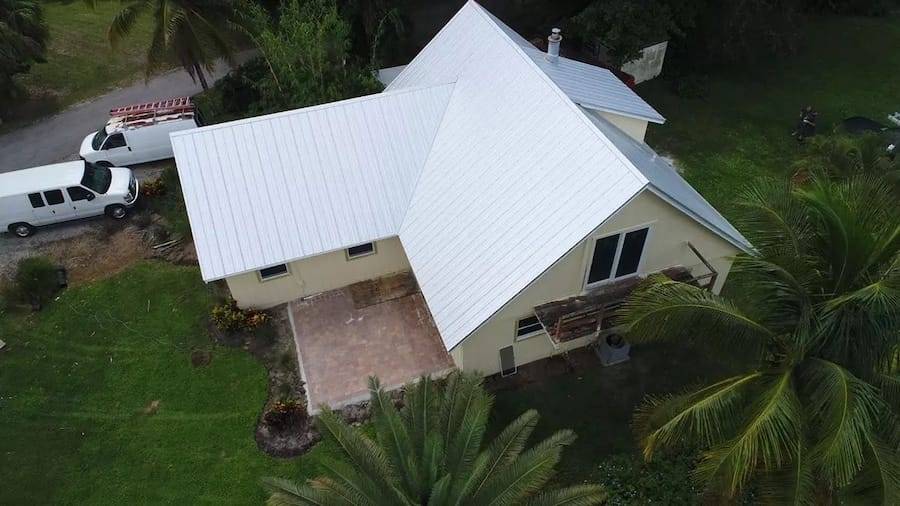
Best Coatings for Metal Roofs
The best coatings for a metal roof depends on the roof’s condition, slope, drainage, rust level, and exposure.
There are several coating types used on metal roofs, but silicone and acrylic elastomeric coatings are two of the most common options.
A 100% silicone coating is the best fit for hot, wet climates because they resist UV exposure and handle ponding water better than many other coatings. A product such as Henry 887G Tropi-Cool Grey 100% Silicone is an example of a high-performance silicone option. It is designed for durable waterproofing and strong ponding water resistance.
Acrylic coatings can also be a good option for certain metal roofs. A product such as Sta-Kool 805 Metal-X is an example of an acrylic coating made for metal roofs. It includes rust inhibitors and can help keep the roof surface cooler through reflectivity.
Budget coatings, such as Rust-Oleum Elastomeric Roof Coating, may be available for smaller applications or limited-use situations. These products can offer reflectivity and weather protection, but they should not be treated as equal to a professional roof restoration system.
For commercial properties or larger roofing projects, the system design matters more than the bucket label. The right coatings depend on what the roof needs after inspection.
Acrylic vs Silicone Coating
Silicone and acrylic coatings can both be useful, but they are not the same.
Silicone is often chosen for roofs that need strong waterproofing and better resistance to ponding water. That makes it a common choice in high-moisture environments like South Florida.
Silicone also performs well against UV exposure. It can hold up under harsh sun and help protect the roof surface from continued weathering.
Acrylic coatings are often valued for reflectivity, flexibility, and cost-effectiveness. Some acrylic coatings for metal roofs include rust-inhibiting properties, which can be helpful when surface oxidation is part of the concern.
The tradeoff is that acrylic coatings typically do not handle ponding water as well as silicone. If water sits on the roof for extended periods, that needs to be considered before choosing acrylic.
There is no one-size-fits-all answer. A roof with good slope, limited rust, and strong drainage may call for one system. A roof with frequent moisture exposure may call for another.
How Much a Roof Coating Costs
Professional metal roof coatings often fall somewhere around $4.50 to $9 per square foot. The final cost depends on roof size, condition, access, prep work, coating type, primer needs, repairs, and system thickness.
A roof with light wear and simple access will usually cost less to coat than a roof with rust treatment, seam repairs, fastener work, and drainage concerns.
This is why square-foot pricing can be misleading without inspection. Two roofs may be the same size but require very different levels of work.
The cheapest quote is not always the best value. If one estimate skips cleaning, rust treatment, primer, seam reinforcement, or fastener sealing, it may look cheaper upfront while setting the roof up for early failure.
A good estimate should explain what is being coated, how the roof will be prepared, what repairs are included, which product will be used, and what warranty or service life expectation applies.
Coating vs Replacing
Coatings can be a smart alternative to roof replacement when the roof still has a solid foundation. It can reduce disruption, lower cost, improve energy performance, and extend the life of the existing system.
Replacement makes more sense when the roof is no longer structurally reliable. Severe rust, failed panels, trapped moisture, major leaks, or widespread deterioration may make coatings a poor investment.
The decision should not be based on age alone. Some older metal roofs are still good candidates for coatings. Some newer roofs have installation issues or damage that make coating less practical.
Whiting Roofing looks at the actual condition of the roof. That includes seams, panels, fasteners, penetrations, flashing, rust, drainage, and signs of water intrusion.
The right answer is the one that protects the building and makes financial sense.
What Happens During Installation
A metal coating project usually starts with a detailed inspection. The contractor needs to identify leaks, rust, loose fasteners, open seams, and drainage issues before work begins.
Next comes preparation. The roof is cleaned, loose material is removed, and rusted areas are addressed. Fasteners may be tightened or replaced. Seams, screws, penetrations, and flashing details may be sealed before the main coating is applied.
Primer may be needed depending on the roof condition and current system. This is especially common when adhesion or rust inhibition is a concern.
The coatings can be applied by spray, roller, or brush. The method depends on the roof, product, access, and project size.
After application, the roof needs time to cure. The contractor should also check coverage, problem areas, and final details before calling the job complete. The finished system should create a continuous protective layer across the roof surface.
How Whiting Roofing Evaluates Metal Roofs
Whiting Roofing has decades of experience working on South Florida commercial and residential roofing systems. That experience matters when deciding whether a metal roof should be coated, repaired, or replaced.
A coating recommendation should never be made from the ground. The roof needs to be inspected closely. The weak points need to be identified. The condition of the metal needs to be understood.
Whiting Roofing looks at the details that determine whether coatings will perform. That includes seams, fasteners, flashing, rust, drainage, penetrations, existing leaks, and the overall condition of the roof system.
If coating makes sense, the right system can help protect the roof and extend its service life. If coating metal does not make sense, the property owner deserves to know that before spending money on the wrong solution.
That honest evaluation is what helps avoid wasted money and repeat roof problems.
Find Out If Your Roof Can Be Coated
Coatings can be a practical way to restore and protect a roof in South Florida. It can help seal vulnerable areas, reduce heat absorption, improve waterproofing, and extend the roof’s usable life.
But the roof has to be a good candidate first. Whiting Roofing is trained for not only metal roofing, but also shingles and tpo roofing solutions.
Before choosing silicone, acrylic, or other coating options, have the roof inspected by a professional who understands South Florida roofing conditions. Whiting Roofing can evaluate your roof, explain what is happening, and recommend whether coating, repair, or replacement is the right next step.