
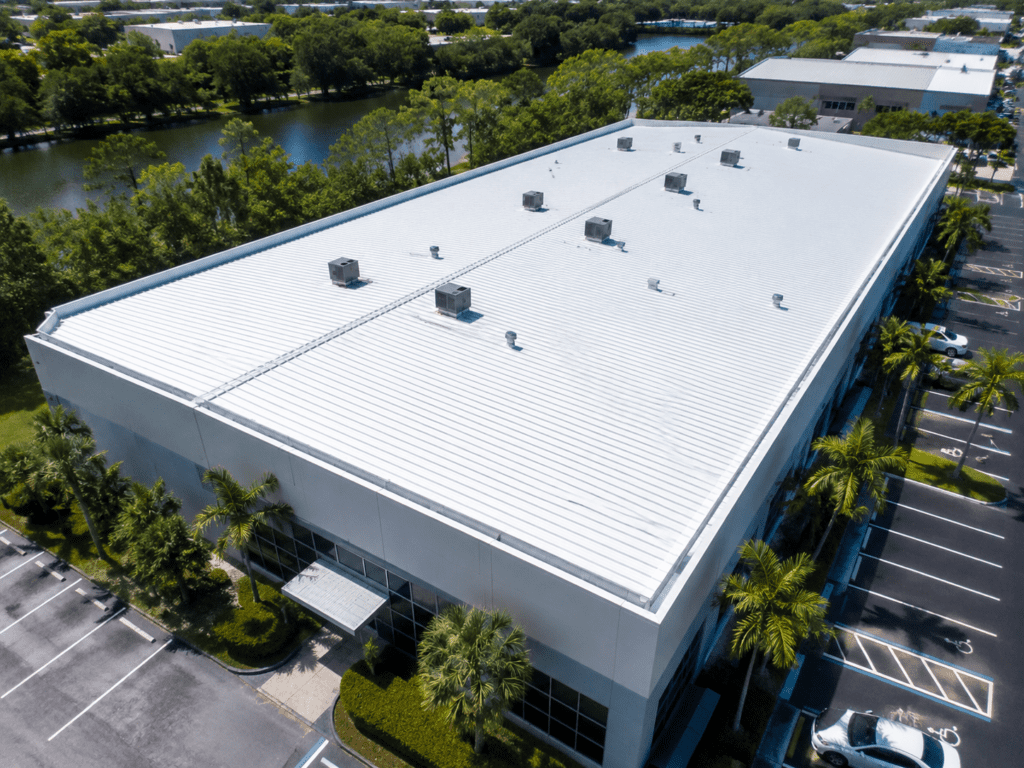
A reflective roof coating can help a South Florida commercial roof handle heat, sun exposure, and daily weathering when the existing system is still in good condition. It is not a cure for a failing roof, but it can be a practical restoration option when the metal roof is structurally sound and properly prepared.
For commercial property owners, the question is not just whether the roof looks worn. The better question is whether the roof can still be protected. Whiting Roofing helps South Florida building owners answer that question by looking at the full roofing system, including panels, seams, fasteners, penetrations, drainage, and previous repair areas.
When the roof is a strong candidate, reflective metal coatings can help extend roof life, reduce surface heat, and protect the metal from continued UV exposure.
Why Reflective Coating Matters in South Florida
The South Florida sun is relentless. A metal roof absorbs heat throughout the day, especially when the existing finish is faded, chalking, or worn down. Over time, that heat can stress the roof, the fasteners, the seams, and the building below it.
A reflective coating is designed to reflect solar heat away from the roof instead of allowing the surface to absorb as much heat. Some products are made to deflect the sun’s energy away, helping the metal stay cooler during peak heat.
That does not mean every building will see the same result inside. Insulation, ventilation, roof design, ceiling height, and building use all matter. But a cooler surface can help reduce heat load and slow some of the weathering that comes from constant sun exposure.
How a White Reflective Metal Coating Work
A reflective coating utilizes reflective pigments to bounce more of the sun back instead of allowing the metal to hold heat. This is why many cool coatings are white or light-colored. A white reflective surface can usually provide stronger reflectivity than a dark surface.
Reflective roof coatings are known for their heat or solar reflectance proerties. The basic goal is simple: displace heat before it builds up on the roof. This supports heat reduction and may help make the building easier to manage during long periods of hot weather.
Whiting Roofing looks at the existing metal, the roof slope, the coating history, and the condition of the substrates before recommending a coating system. Different substrates need different preparation, and poor prep can ruin even good products.
A Coating Is Not Just Paint
One of the biggest mistakes building owners make is thinking roof coatings are the same as paint. They are not. A coating is part of a roofing restoration system. It needs proper cleaning, repair, detailing, and application.
Paint may change the color of a roof. A properly selected coating is meant to protect the roof surface and help create a more durable weathering layer. The right coating protects your roof from continued sun, rain, and surface exposure when the underlying roof is still stable.
This is why Whiting Roofing does not recommend coating a roof without inspecting it first. If the metal has severe rust, open seams, loose panels, trapped moisture, or failing flashings, the roof may need repair or replacement before any coating makes sense.
Product Choice Depends on the System
There are many reflective coating options on the market. Product research is useful, but product choice should come after the roof evaluation. A roof with ponding water, for example, may need a different approach than a sloped metal roof with strong drainage. Silicone coatings may be considered in certain wet areas, while other coatings may be better suited for different roof conditions.
Acrylic metal roof coatings can be a strong option for sloped metal roofs with good drainage because they offer reflectivity, flexibility, and cost-effective UV protection. However, acrylic coatings are not ideal for every South Florida roof, especially areas with ponding water or ongoing moisture concerns, which is why Whiting Roofing evaluates the roof conditions before recommending a system.
Some metal roofs also have factory finishes, including pvdf paint systems. Those surfaces may require special preparation so the coating can bond correctly. If the coating cannot adhere to the existing finish, the system will not perform the way it should.
The roof decides the product. The product should never decide the roof.
Where Reflective Coatings Help Most
Reflective coatings can be useful on a commercial metal roof that is weathered but not failing. They can help when the roof has lost reflectivity, when the original finish has faded, or when the building owner wants to extend service life without a full tear-off.
Reflective roofing can also help protect large roof areas that take direct sun all day. Warehouses, retail centers, industrial buildings, office buildings, and condo association properties often have broad roof sections where heat builds quickly.
The benefit is not limited to the top of the building. Heat emitted from a hot roof can affect rooftop equipment, attic or ceiling spaces, upper rooms, and even nearby walls depending on the building design. A cooler roof will not solve every comfort issue, but it can be one part of a smarter building maintenance plan.
Prepare the Roof Surface Correctly
Reflective coating only works when the roof is prepared correctly. The surface needs to be cleaned, dried, repaired, and checked for adhesion. Rust must be addressed. Loose fasteners need attention. Seams, curbs, penetrations, and edges need to be detailed.
The coating also needs the right weather window. South Florida humidity, rain, and heat can affect application. If crews coat over moisture, dirt, loose rust, or failing older coatings, the new coating may blister, peel, or fail early.
Flexible coating systems can help handle normal metal movement, but flexibility does not overcome bad prep. The quality of the work under the coating matters as much as the coating itself.
When Reflective Roof Coatings Not Enough
A reflective coating is not the right answer for every roof. If the roof is structurally compromised, leaking across multiple areas, rusted through, or poorly attached, coating over it will only delay the real problem.
Whiting Roofing looks for signs that the roof is still worth restoring. If it is, coating may be a smart option. If it is not, the honest recommendation may be to repair it first before replacement.
That matters because South Florida weather exposes weak roofing decisions quickly. Heavy rain, wind, salt air, UV exposure, and storm season do not give a bad coating job much room to hide.
Talk to Whiting Roofing About Your Metal Roof
If your South Florida commercial metal roof is aging, faded, or absorbing too much heat, reflective coating may be worth considering. The best next step is not guessing from product labels. It is having the roof evaluated by a roofing team that understands commercial buildings, metal systems, coating prep, and South Florida weather.
Whiting Roofing can inspect the roof, explain what they find, and help determine whether reflective coating, targeted repair, or replacement makes the most sense for your building.