
Commercial Flat Roof Replacement in Florida

Flat and low-slope commercial roofs require more than a new membrane. Drainage, insulation, penetrations, flashing, deck condition and the existing roofing assembly all affect how a replacement should be designed.
Whiting Roofing evaluates the complete roof before recommending a replacement system, helping Florida building owners move from recurring repairs to a planned long-term roofing solution.
When a Commercial Flat Roof Should Be Replaced
Flat roofs often develop repairable problems long before they need a full replacement.
A failed seam, damaged flashing, isolated puncture or small wet area may be handled through targeted repair. A roof with a structurally sound assembly may also qualify for a coating or restoration system.
Replacement becomes the stronger option when deterioration is no longer isolated.
Repeated leaks across different areas, widespread wet insulation, extensive membrane failure, deteriorated decking, chronic problems that cannot be corrected through restoration, or continued spending on short-term repairs can indicate that the roof has moved beyond the repair stage.
A proper inspection should answer that question before a replacement scope is written.
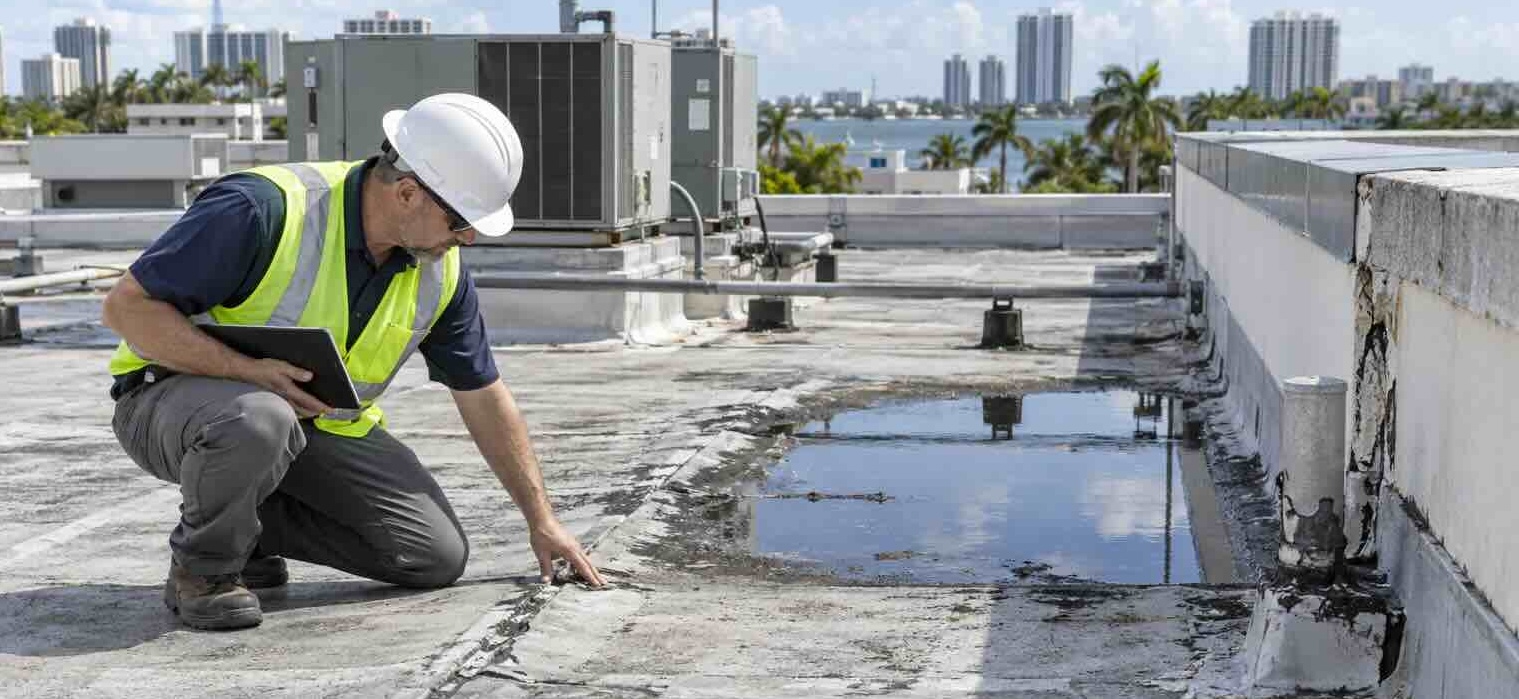
Flat Roofing Systems for Commercial Replacement
There is no universal “best” flat roofing material. The appropriate system depends on the building and what the property owner needs from the roof
Spray Polyurethane Foam
SPF is spray-applied to create a continuous roofing and insulation layer. Because it conforms to penetrations and transitions, it can be useful on commercial roofs with complex layouts.
Its seamless nature also makes SPF particularly relevant where conventional membrane seams would otherwise be numerous.
Whiting Roofing has installed SPF systems in Florida for decades.
TPO Roofing
TPO is a single-ply membrane commonly used on commercial flat and low-slope buildings. Sections of membrane are joined to create a continuous waterproofing surface.
TPO can be considered when the project calls for a reflective membrane system and the building configuration is suited to single-ply roofing.
PVC Roofing
PVC is another single-ply system used on commercial roofs. The right application depends on the activities occurring on the building, rooftop exposure and the project requirements.
Modified Bitumen
Modified bitumen is a reinforced asphalt-based roofing system that can provide a durable multi-layer approach for low-slope commercial roofs.
Built-Up Roofing
Built-up roofing uses multiple layers to create a robust commercial roofing assembly. Existing BUR roofs may eventually require replacement because of widespread deterioration, trapped moisture or problems within the underlying assembly.
The system selected for a replacement should follow the building—not the other way around.
Compare the broader options on our Flat Roof Systems page.
Full Tear-Off vs Commercial Roof Recover
One of the most important questions during flat roof replacement is whether the existing roof should come off.
Full Tear-Off
A tear-off provides access to the underlying roofing assembly and allows deteriorated material to be removed rather than buried.
It may be appropriate when there is widespread moisture, significant deterioration, unsuitable existing roofing layers, deck problems or conditions that prevent the existing roof from serving as a dependable substrate.
Roof Recover
Some commercial roofs can receive a new approved roofing system over the existing assembly.
Recovering can reduce removal and disposal, but it should only be considered after the existing roof has been evaluated. Installing new material over a roof with trapped moisture or serious underlying deterioration does not solve those problems.
The decision needs to be based on the roof’s actual condition, applicable requirements and the specifications of the selected roofing system.
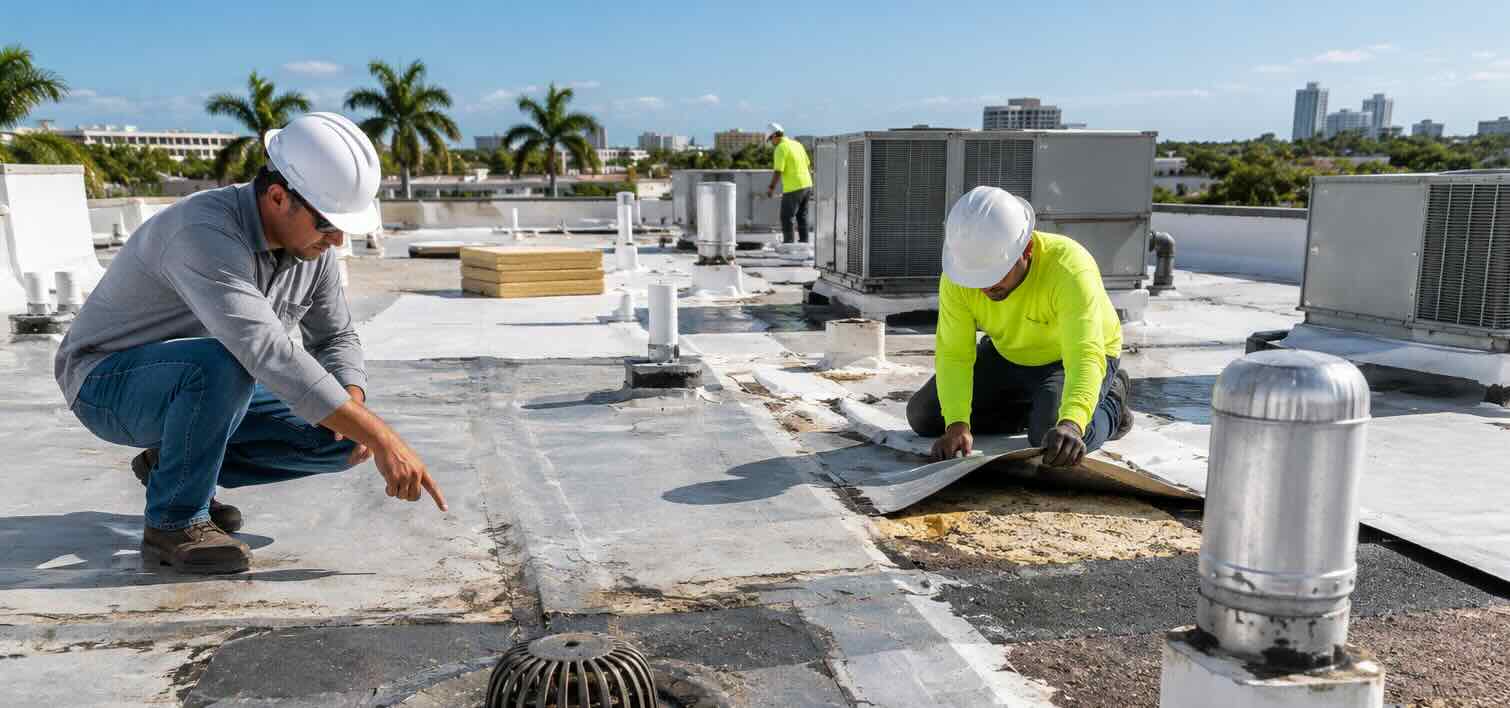
Moisture and Insulation Matter
What you see on top of a flat roof is only one part of the roofing assembly.
Water can enter through a membrane defect and migrate through insulation before the problem becomes obvious inside the building. That is one reason a visual surface inspection alone may not tell the whole story.
Before a major flat roof project, we look for evidence that helps establish whether insulation and underlying components remain serviceable.
If wet or damaged material is discovered, the replacement scope needs to account for it.
Covering a known moisture problem with a new membrane simply moves the problem beneath the new roof.
Drainage Is Part of the Replacement
Ponding water should not be treated as an unrelated issue.
Commercial flat roofs rely on drains, scuppers, gutters and the overall roof configuration to move water from the surface.
During replacement planning, drainage should be reviewed so the new system is not installed over an unresolved problem.
In some cases, improvements can be incorporated into the reroof design. In others, existing drainage simply needs to be restored and protected correctly.
The goal is to create a roofing assembly that manages South Florida rainfall rather than continually fighting it.
Rooftop Equipment and Penetrations
Rooftop Equipment and PenetrationsCommercial roofs often contain far more penetrations than residential roofs.
HVAC equipment, pipes, vents, electrical penetrations, curbs, skylights and other details interrupt the main roofing surface. Each transition has to be incorporated into the replacement system correctly.
These details should be documented during the initial assessment so they are included in the scope—not discovered as an afterthought once installation has started.
Our Commercial Roof Replacement Process
Assessment
We inspect the existing roof, drainage, penetrations, flashing and visible problem areas.
Investigation
Where appropriate, additional evaluation helps identify moisture or concealed conditions that affect the scope.
System Selection
We compare appropriate systems based on the building, existing assembly and long-term objectives.
Project Planning
Access, staging, occupied areas, material handling and work sequencing are established.
Roof Replacement
The existing roof is removed or prepared according to the approved scope, necessary substrate work is completed and the new system is installed.
Closeout
The finished work is reviewed and applicable warranty and maintenance information is provided.
Flat Roof Replacement for Occupied Commercial Properties
Commercial reroofing often takes place over active businesses.
We take the building’s use into account when developing the schedule and work plan. Retail properties, offices, warehouses, government facilities and multi-family properties all have different operational concerns.
Clear staging, controlled work zones and communication with the property manager help keep a large roofing project manageable.
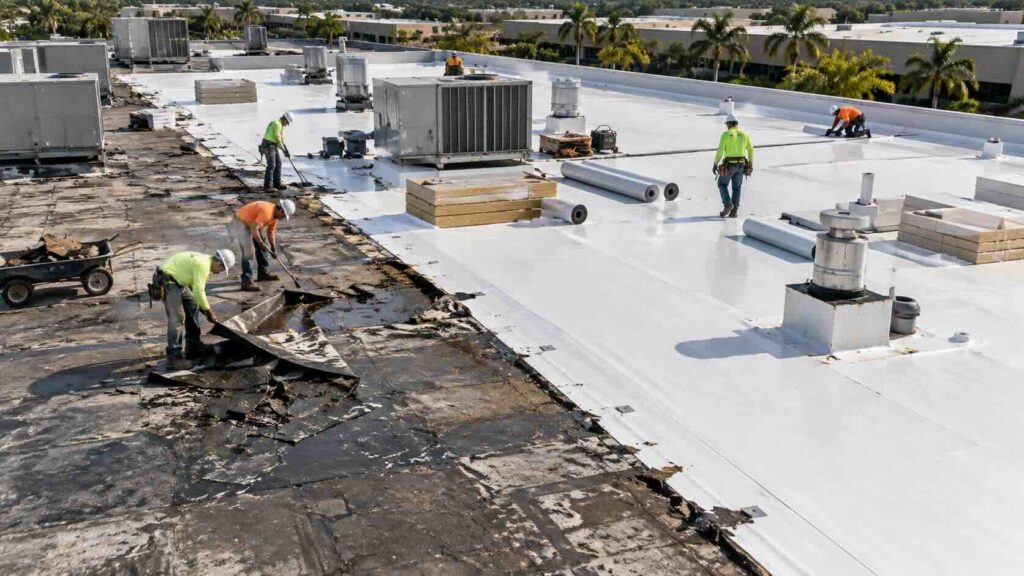
Should You Replace or Restore the Flat Roof?
An aging surface does not always mean the underlying roof has failed.
If the deck is sound, insulation is sufficiently dry and the existing roofing system can be properly prepared, restoration may extend the roof’s useful life.
If moisture or deterioration is widespread, or the roof no longer provides a suitable foundation for restoration, replacement becomes the more appropriate direction.
That distinction is important enough that we recommend making the decision before requesting “replacement-only” bids.
Commercial Flat Roof Replacement FAQs
What is the best replacement system for a commercial flat roof?
There is no one answer for every building. SPF, TPO, PVC, modified bitumen and built-up systems each have different characteristics. The building configuration, existing roof, drainage, rooftop use and project objectives should determine the recommendation.
Do you always have to tear off the old flat roof?
No. Some roofs may qualify for a recover system. Others need to be removed because of moisture, deterioration, roof layers or other existing conditions.
What happens if wet insulation is found?
Wet or otherwise unsuitable material generally needs to be addressed as part of the roof project rather than simply covered over. The specific scope depends on the extent and location of the affected areas.
Can a flat roof be coated instead of replaced?
Sometimes. A coating or restoration system can be useful when the underlying roof remains serviceable and the surface is compatible with the restoration system. It is not a substitute for correcting widespread underlying failure.
Can our business remain open during replacement?
Many commercial buildings continue operating during roofing work. The feasibility and work sequence depend on the property, project size and activities occurring at the building.
All Commercial Roof Replacement Services
Explore our complete commercial roof replacement services and compare options for flat, metal, and other commercial roofing systems.