
Commercial Roof Replacement in South Florida

When repairs are no longer solving the underlying problem, a commercial roof replacement gives your building a new roofing system designed around its structure, drainage, insulation needs and long-term performance.
Whiting Roofing replaces commercial roofs for property owners, facility managers, businesses, associations and organizations throughout Florida. Our team works with flat and low-slope roofing systems, spray polyurethane foam, single-ply membranes, built-up roofing and metal systems.
Every project starts with a thorough roof evaluation. We determine what can stay, what needs to come off and which roofing system makes the most sense for the building before we recommend a scope of work.
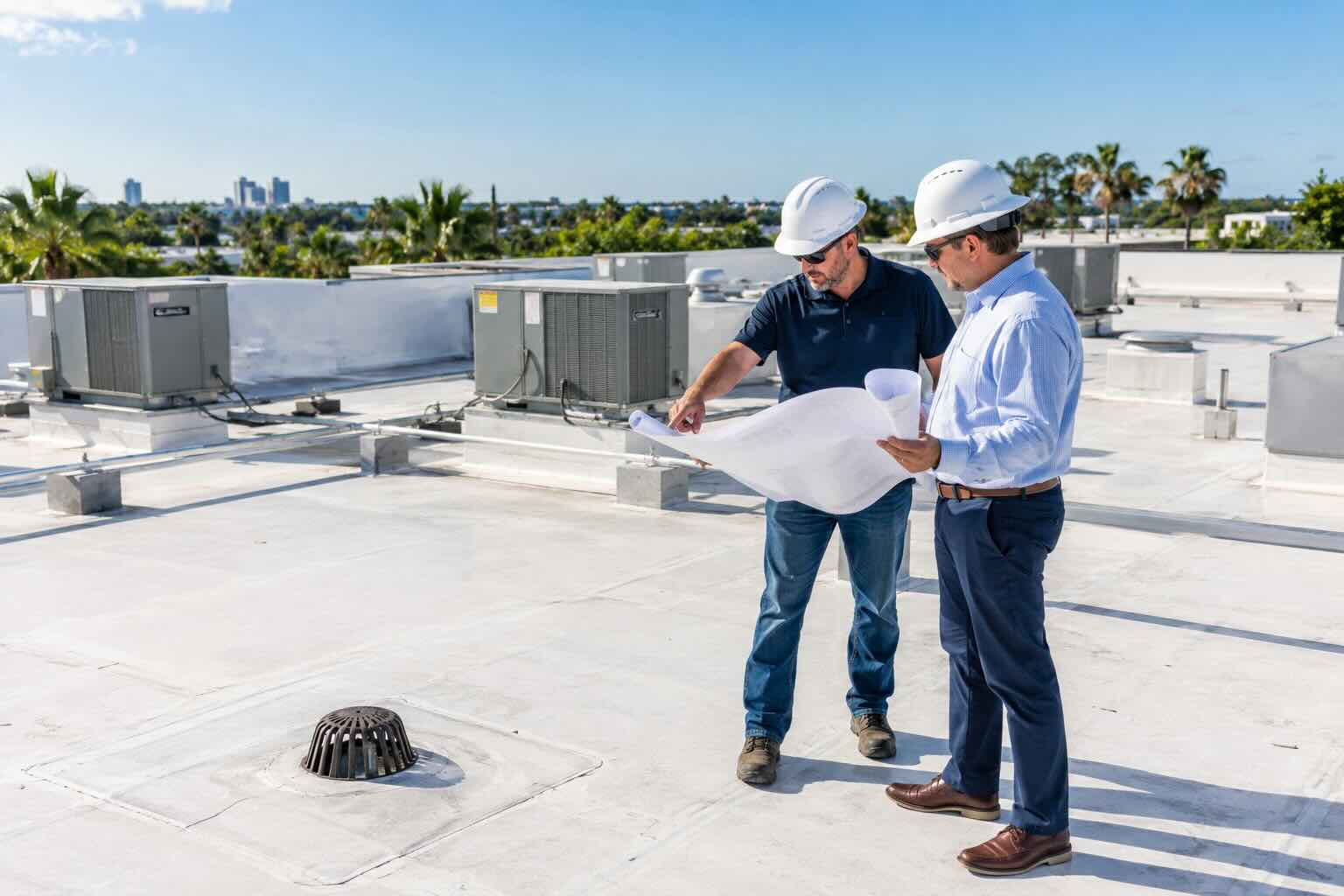
We also look beyond the roofing surface itself. Drainage patterns, rooftop equipment, penetrations, flashing details and insulation conditions can all influence how a commercial roof replacement should be planned and which system is appropriate for the property.
Because many commercial buildings need to remain operational during roofing work, project planning is an important part of the replacement process. Access, staging, work areas and daily operations should all be considered before installation begins so the project can move forward in a controlled and organized way.
Our goal is to give building owners a clear understanding of the roof’s condition and the available replacement options. Rather than recommending the same solution for every property, we develop the scope around the building, the existing roofing system and the long-term needs of the owner.
For a broader look at our roofing systems, repairs, maintenance, and other solutions for commercial properties, explore our Commercial Roofing services in South Florida.
Free Quote
Contact us to get a free quote on your project!
Commercial Roof Replacement Built Around Your Building
Replacing a commercial roof is different from replacing a residential roof. Commercial buildings are larger, usually have more penetrations and rooftop equipment, and often need the work completed while tenants, employees, customers or residents continue using the property.
That makes planning just as important as installation.
Our team evaluates the existing roof, insulation, drainage, penetrations, flashing and visible deck conditions before developing the replacement plan. We also consider access, staging, building operations and the roofing system currently in place.
The goal is not simply to put new material over a building. It is to create a complete commercial roofing system that fits the property and gives the owner a clear path forward.
When Is It Time to Replace a Commercial Roof?
A leak by itself does not automatically mean a roof needs to be replaced. Many commercial roofing problems can be repaired, and some aging systems can be restored or recoated.
Replacement becomes more likely when problems are widespread rather than isolated.
Recurring leaks in different areas, saturated insulation, widespread membrane deterioration, deteriorated decking, repeated repair expenses and roofing that can no longer be restored effectively can all indicate that it is time to consider replacement.
We look at the whole roof before making that recommendation.
If the existing system still has useful life, we may recommend repair, maintenance or restoration instead. If those options would only postpone a larger failure, we will explain why replacement is the more practical long-term route.
Commercial Roofing Systems We Replace
Whiting Roofing works with the commercial roofing systems commonly found on Florida buildings.
SPF Roofing Systems
Spray polyurethane foam creates a seamless roofing surface while also adding insulation. SPF can be particularly useful on flat and low-slope commercial roofs with numerous penetrations, transitions or irregular areas.
Depending on the existing roof condition, SPF may sometimes be installed as part of a recover strategy rather than a conventional full tear-off.
TPO and Other Single-Ply Roofing
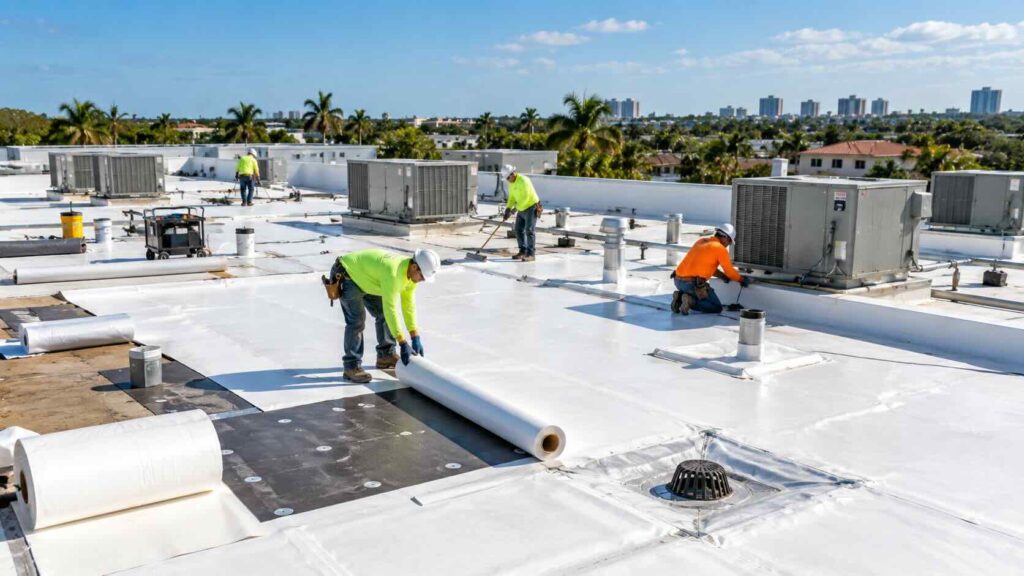
Single-ply membranes are widely used on flat and low-slope commercial buildings. A commercial roof replacement may include removal of the existing membrane and insulation, repair of the roof deck where required, and installation of a new roofing assembly.
The correct membrane and attachment method depend on the building, project specifications and existing conditions.
Built-Up and Modified Bitumen Roofing
Older commercial properties often have built-up or modified bitumen systems. When these roofs reach the end of their practical service life, replacement gives us an opportunity to inspect the underlying assembly, correct problem areas and install a new system designed around current building needs.
Commercial Metal Roofing
Commercial metal roofs can perform for many years, but widespread corrosion, recurring seam problems, damaged panels or deterioration beneath the roofing can eventually make replacement more appropriate than another round of repairs.
Some metal roofs are also candidates for restoration. We evaluate the condition before recommending either approach.
Commercial Flat Roof Replacement
Flat and low-slope roofs require particular attention to drainage, insulation, flashing and rooftop penetrations.
Water should have a dependable path to drains, scuppers and gutters. HVAC curbs, pipes, vents and other penetrations must be integrated properly into the new roofing system. Any wet insulation or damaged areas discovered during the work need to be dealt with rather than concealed beneath new roofing.
Because this is such a significant part of commercial replacement work, we have a dedicated guide to the process.
Tear-Off, Recover or Restoration?
Commercial roofing does not always have a single solution.
A full tear-off removes the existing roofing assembly as required so the underlying conditions can be addressed before the new system is installed.
A roof recover installs an approved new roofing system over an existing assembly when the roof is suitable for that approach.
A roof restoration repairs and renews a serviceable existing roof rather than replacing it.
The correct route depends on factors such as moisture, deck condition, existing roof layers, attachment, drainage, code requirements and the roofing system involved.
We evaluate those conditions first instead of assuming every older roof needs the same scope of work.
Our Commercial Roof Replacement Process
Commercial Roof Assessment
We begin by reviewing the existing roof, problem areas, drainage, penetrations, flashing and visible signs of moisture or deterioration. Where additional investigation is appropriate, the assessment can include testing intended to better understand what is happening below the surface.
Replacement Options and Scope
Once we understand the condition of the existing roof, we discuss suitable replacement systems and prepare a clear scope of work. The proposal should make it easy to understand what is being removed, repaired or retained, which roofing system will be installed and what the project includes.
Project Planning
Commercial roofing requires coordination. Before installation begins, we plan access, material staging, protection of the property and a work sequence appropriate for the building. For occupied properties, that planning helps reduce unnecessary interference with normal operations.
Roof Preparation and Replacement
The existing system is removed or prepared according to the approved scope. Any required deck or insulation work is addressed, and the new commercial roofing assembly is installed according to the selected system.
Final Inspection and Documentation
After installation, we review the completed roof and close out the project. Warranty information and ongoing maintenance recommendations are provided based on the roofing system installed.
Replacing a Roof Without Unnecessarily Disrupting Your Business
Commercial properties cannot always stop operating because roofing work is underway.
Warehouses still need deliveries. Retail buildings still need customers to enter safely. Offices remain occupied. Multi-family properties still have residents.
We plan commercial reroofing projects with those realities in mind.
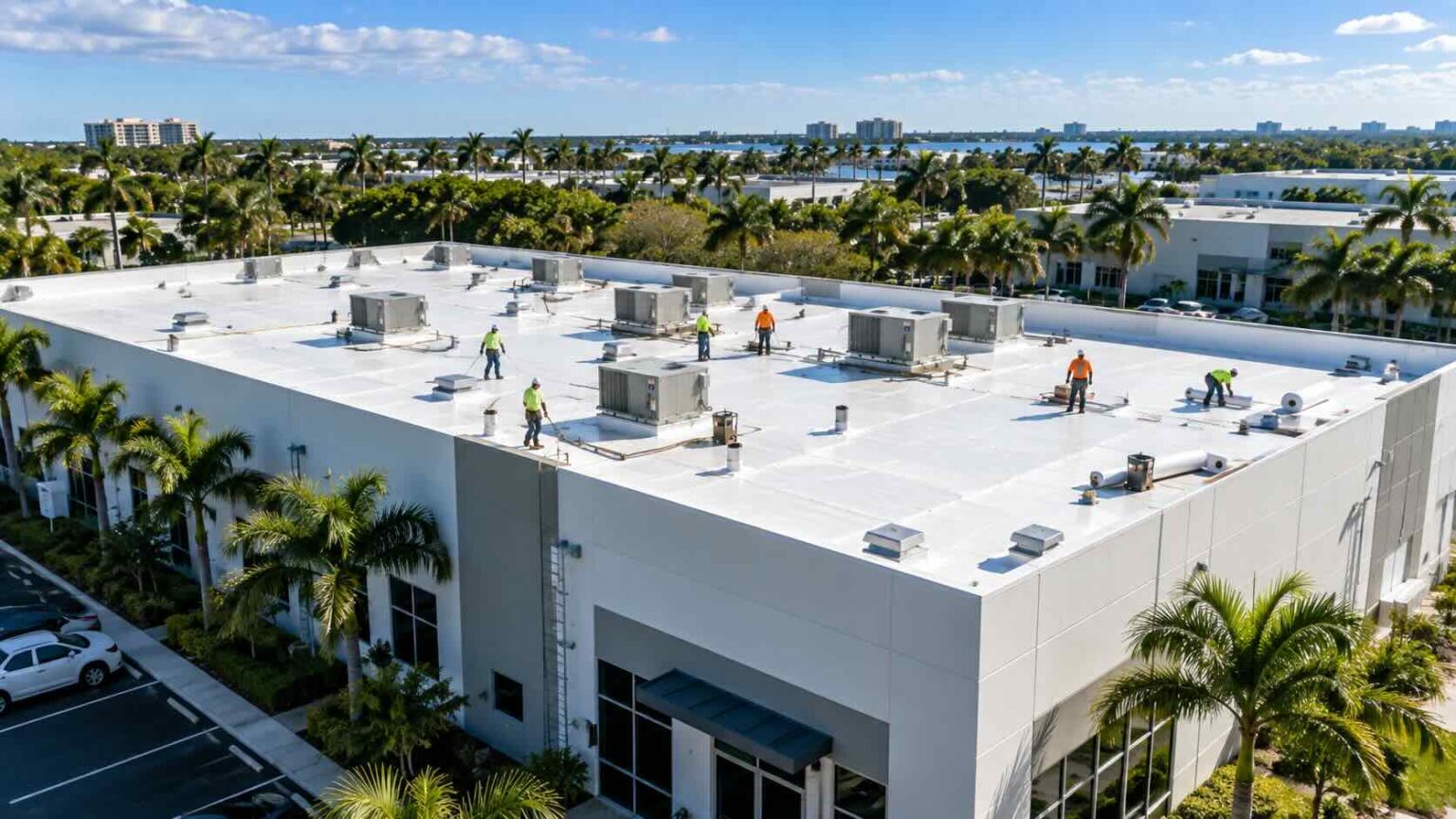
The exact strategy varies by property, but it can include phased work areas, coordinated access, organized material staging and communication with property management throughout the project.
The objective is to protect the building while completing the work in a controlled and professional manner.
Why Commercial Property Owners Choose Whiting Roofing
Whiting Roofing’s history in Florida goes back to the early 1980s, and the company has extensive experience with SPF and other commercial roofing systems. Today the company is Florida licensed, works across multiple commercial roofing disciplines and operates with its own equipment and in-house capabilities.
That experience matters during replacement because the best recommendation is not always “replace everything.” A contractor should be able to distinguish between a roof that can still be repaired or restored and one where a properly planned replacement makes more sense.
Whiting Roofing also offers financing options for qualifying roofing projects, including commercial work.
Commercial Roof Replacement Throughout Florida
Whiting Roofing is based in Palm City and serves commercial properties across its Florida service region, including communities in Palm Beach, Martin, St. Lucie, Indian River and Brevard counties.
If you manage multiple properties or have a project outside those immediate areas, contact our team to discuss the building and project location.
Commercial Roof Replacement FAQs
How do I know whether my commercial roof needs replacement?
The decision should be based on condition rather than one symptom or the roof’s age alone. Widespread moisture, recurring leaks, failing roofing materials, damaged decking and increasingly frequent repairs can all point toward replacement. An inspection can determine whether repair, restoration, recover or replacement is appropriate.
Can you replace a commercial roof while the building is occupied?
Many commercial reroofing projects can be completed while a property remains in use. The project plan should account for access, staging, noise, safety and the activities taking place inside and around the building.
Can a new commercial roof be installed over the existing roof?
Sometimes. A roof recover can be possible when the existing assembly and building conditions allow it. Wet insulation, deteriorated decking, unsuitable existing layers or other conditions may require removal instead.
What commercial roofing systems can be used for replacement?
Options can include SPF, TPO and other single-ply systems, built-up roofing, modified bitumen and commercial metal. The correct system depends on the building, drainage, roof configuration, budget and long-term objectives.
How long does commercial roof replacement take?
There is no single timeline. Roof size, system type, tear-off requirements, access, weather, deck repairs and the need to work around building operations can all affect scheduling. The expected schedule should be established as part of the project proposal.
Do commercial roof replacements include warranties?
Warranty options depend on the roofing system, manufacturer, project specifications and scope of work. Whiting Roofing discusses the applicable workmanship and manufacturer coverage before installation.