Multi Family Roof Maintenance and Repair Guide
Multi-family roof maintenance should help property managers prevent leaks, limit resident disruptions, and plan roofing expenses before emergencies force quick decisions.
Maintenance services should cover more than occasional repairs. It should establish inspection schedules, clean drainage components, monitor vulnerable details, document changes, and prioritize work across the property.
We have maintained roofs on apartments, condominiums, HOA communities, and other managed properties throughout Florida. We understand that custodians need practical answers, useful documentation, and recommendations that fit their budgets.
Why Roof Maintenance Matters for Multi-Family Properties
One overlooked roof problem can affect several units at the same time. A failed flashing detail or blocked drain may damage ceilings, insulation, drywall, flooring, and residents’ belongings.
The repairs may only be one part of the expense. Property management may also face emergency calls, resident complaints, interior restoration, vendor coordination, and insurance documentation.
Routine roof upkeep gives us opportunities to catch problems before water reaches occupied areas. It also helps preserve roofing materials that still have years of useful service remaining.
This becomes especially important in Florida. Multi-family apartment roofs face intense sunlight, heavy rain, high humidity, tropical storms, and hurricane-force winds. These conditions can wear down sealants, loosen roofing materials, and expose installation weaknesses.
A maintained roof is also easier to budget for. When we document its condition over time, property managers can see which repairs are becoming more frequent. They can then prepare for restoration or roof replacement before the roof becomes an emergency.
Contact Us
Common Roof Problems Property Managers Should Watch For
You do not need to climb onto the roof to identify every problem. Many roofing issues first appear in attics, upper-floor units, exterior trim, gutters, and drainage areas.
The following warning signs should be documented and reported promptly. Even a small symptom can point to a larger problem above it.
Early Leaking in the attic
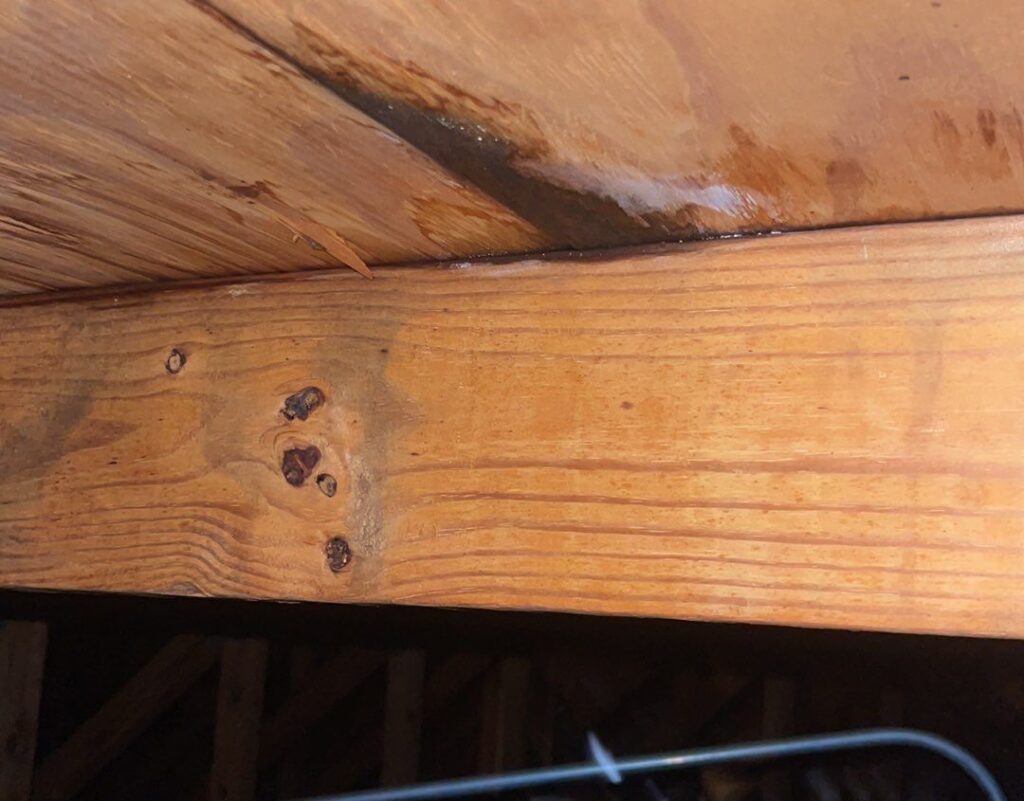
An attic often shows evidence of a roof leak before water reaches a finished ceiling. During accessible attic inspections, look for darkened plywood, wet insulation, rusted fasteners, water trails, and musty odors.
Fresh leaks may only appear during wind-driven rain. Older leaks can leave stains even when the wood feels dry. Because of that, the location and timing of the moisture matter.
Water does not always enter directly above the visible stain. It can follow rafters, roof decking, pipes, or other components before dripping into the attic. We trace the moisture back to its likely entry point instead of repairing the first surface defect we see.
Attic moisture can also come from condensation or mechanical equipment. A qualified inspection should separate roofing leaks from plumbing, HVAC, and ventilation problems.
Water damage around trim boards
Damaged fascia, soffit, and other exterior trim can indicate that water is getting behind the roof edge. Custodians may notice peeling paint, discoloration, soft wood, open joints, or rotted sections.
The trim board is not always the source of the problem. Water may be entering through damaged edge metal, loose roof materials, overflowing gutters, or failed flashing. Replacing the wood without correcting the water path will allow the damage to return.
We inspect the surrounding roof edge before recommending repairs. Depending on the cause, the roofing projects may involve replacing damaged trim, correcting flashing, securing roofing materials, or improving drainage.
Ponding Water on Flat Roofs
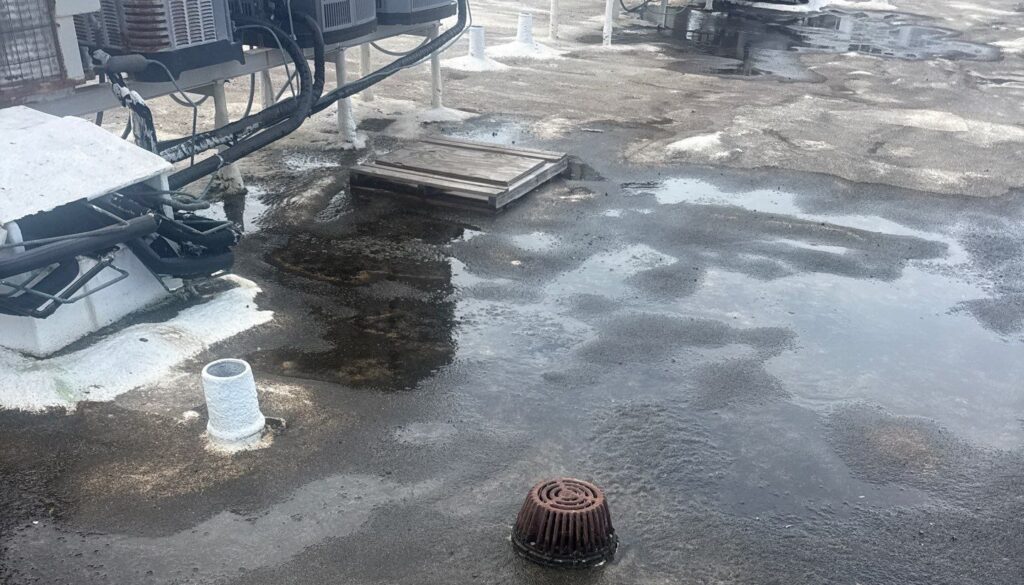
Ponding water is water that remains in low areas after the rest of the roof has drained. It commonly develops around drains, behind rooftop equipment, or in sections with poor slope.
Standing water places additional stress on the roofing system. It can accelerate coating wear, expose weak seams, collect dirt, encourage organic growth, and make small surface defects more vulnerable.
Ponding may result from blocked drains, compressed insulation, structural movement, or poor original slope. The right solution depends on the cause and the size of the affected area.
Cleaning the drains may solve a simple drainage problem. Other roofs may need tapered insulation, drainage changes, repairs, or localized SPF applications to help guide water toward existing outlets.
Damaged Flashing, Vents, and Roof Penetrations
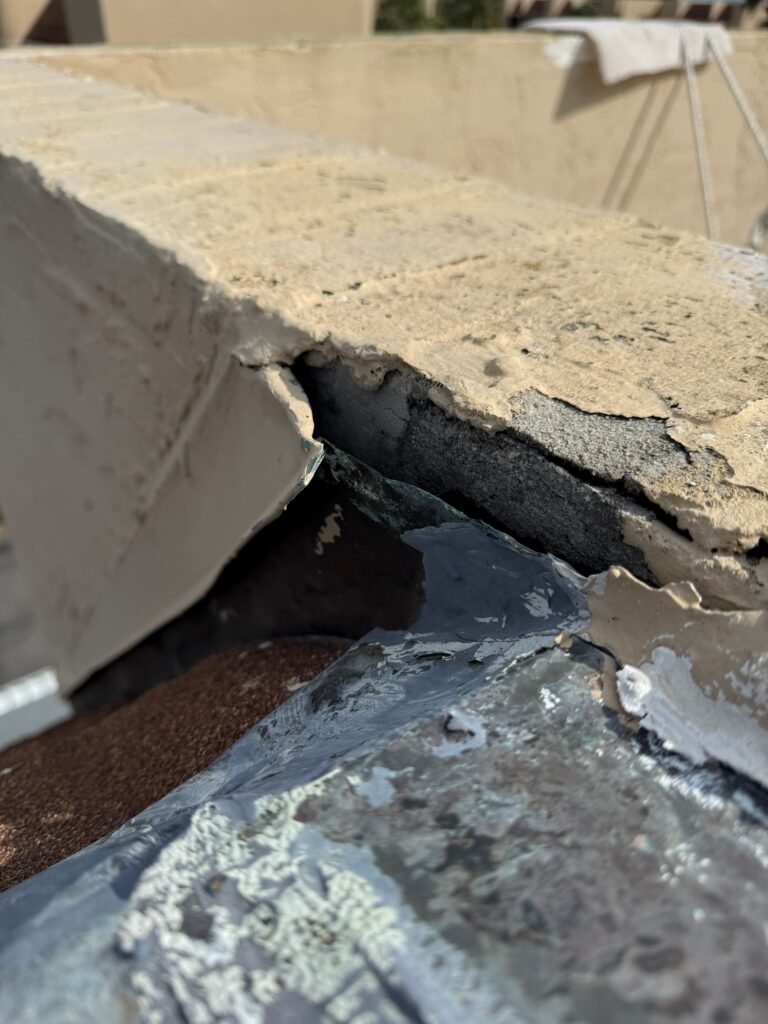
Penetrations create some of the most vulnerable areas on any roof. Plumbing vents, exhaust fans, electrical lines, HVAC supports, skylights, roof hatches, and other openings must remain properly sealed.
Florida’s heat causes roofing materials and metal components to expand and contract. Over time, sealants can crack, pull away, or lose adhesion. Metal flashing may loosen or corrode. Membranes can also separate where they terminate around penetrations.
These defects often begin small. However, even a narrow opening can allow water beneath the roofing system during heavy rain.
We inspect penetrations for failed caulking, open seams, loose components, surface cracks, and previous repairs that are breaking down. Correcting these details early can prevent damage to insulation and roof decking.
Drainage Problems Around Gutters, Scuppers, and Downspouts
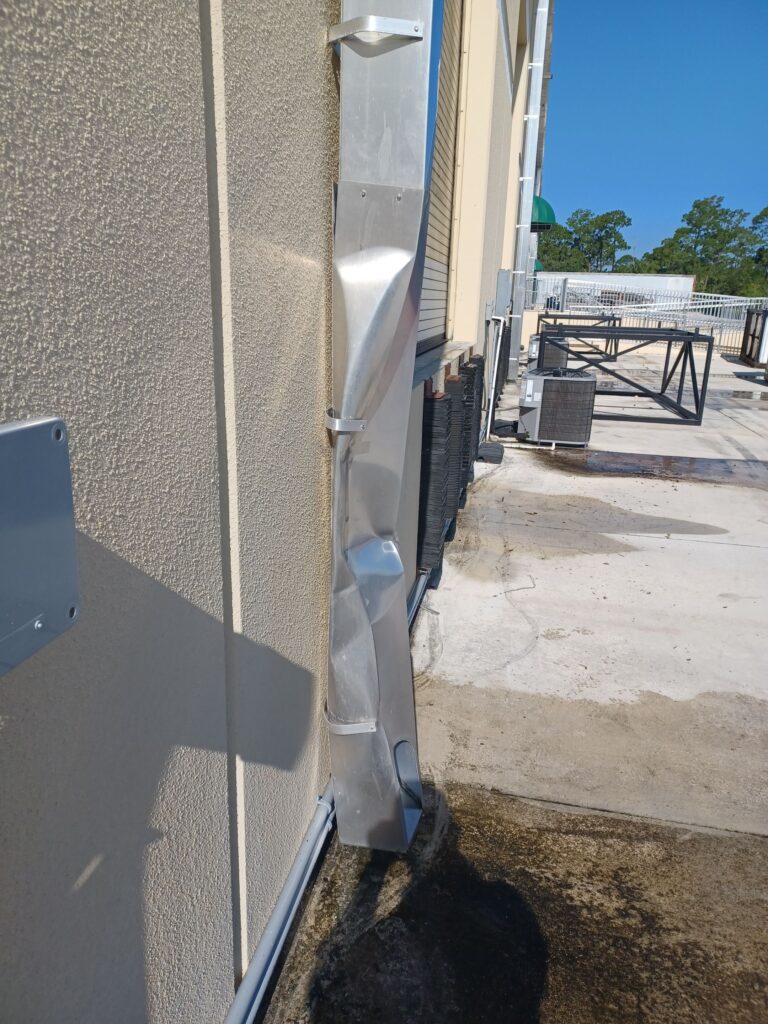
Every roofing system needs a clear path for water to leave the building. On multi-family properties, that path may include valleys, gutters, internal drains, scuppers, collector boxes, and downspouts.
Leaves, branches, roof granules, nesting materials, and other debris can restrict water flow. Water may then back up beneath roofing materials or spill over exterior walls and walkways.
Drainage components can also pull away from the building or separate at their connections. Downspouts sometimes discharge water too close to the foundation, creating problems at ground level.
We check whether water can move through the complete drainage system. Cleaning the roof surface without clearing the outlets only moves debris into another blockage.
Wind Uplift and Storm-Related Roof Damage
High winds can loosen shingles, lift tiles, separate membrane seams, damage edge metal, and pull flashing away from walls. Flying debris can puncture flat roofing systems or crack roof materials.
Storm damage is not always visible from the ground. A roofing material may settle back into place after lifting, even though its seal or attachment has been weakened. The next storm may cause that area to open further.
Maintenance crews should watch for displaced materials, debris on the ground, bent metal, damaged fascia, new ceiling stains, and loose components moving during windy conditions.
We recommend inspecting the roof after major storms, even when residents have not reported leaks. Early documentation can also provide a record of the roof’s post-storm condition.
Aging Roof Membranes and Surface Wear
Flat and low-slope roofing systems show age in different ways. Depending on the material, we may find cracking, blisters, open seams, punctures, exposed reinforcement, worn coatings, or areas that feel soft beneath the surface.
UV exposure can gradually break down unprotected roofing materials. Foot traffic around mechanical equipment can also wear or puncture the membrane, especially when service routes are not clearly defined.
Surface wear does not automatically mean the entire roof must be replaced. Localized repairs, seam reinforcement, recoating, or restoration may be possible when the underlying system remains dry and stable.
The inspection should determine whether the wear is isolated or widespread. That distinction helps us decide whether upkeep will provide lasting value.
What Should Be Included in a Multi-Family Roof Maintenance Plan
A plan should match the property’s roof types, building count, age, drainage layout, and repair history. A community with several tile roofs will have different needs from a complex with one large TPO or modified bitumen system.
At a minimum, the plan should include scheduled inspections, drainage cleaning, flashing checks, surface evaluations, post-storm assessments, and consistent recordkeeping.
Spring and Fall Roof Inspections
We recommend inspecting multi-family apartment roofs at least once each year. Many properties benefit from semiannual professional inspections during the spring and fall.
A spring inspection can identify damage caused by winter weather and prepare the roof for Florida’s rainy and hurricane seasons. A fall inspection can document storm-season wear and address damage before the end of the year.
During each visit, we compare current conditions with previous reports. This helps us determine whether repairs remain stable or an area is deteriorating faster than expected.
Inspection frequency may need to increase for older roofs, buildings near the coast, heavily wooded properties, or roofs with recurring drainage problems.
Cleaning Gutters, Scuppers, and Downspouts
Drainage components should be cleaned before debris causes water to back up. We remove leaves, branches, sediment, and other materials that prevent water from reaching the intended outlets.
We also look for loose gutters, damaged scuppers, separated connections, and downspouts that no longer discharge properly. Water stains around these components can show where overflow has occurred.
The cleaning schedule should reflect the property. Buildings beneath large trees may need more frequent service than open properties with little nearby vegetation.
Flashing and Sealant Checks
Sealants and flashing protect some of the most complicated areas of a roof. These details should be checked around penetrations, walls, curbs, transitions, roof edges, and mechanical equipment.
We look for cracked caulking, gaps, loose metal, corrosion, missing fasteners, and repairs that have separated from the original roofing material.
Applying more sealant is not always the correct repair. Some areas must be cleaned and prepared before new material can bond properly. Other failures require new flashing or roofing material instead of another layer of caulking.
Roof Surface and Membrane Inspections
The roof surface should be checked for damage, movement, wear, and signs of trapped moisture. The conditions we look for depend on the roofing system.
On shingle roofs, we check for loose, missing, cracked, or worn shingles. Tile roofs require attention around broken tiles, displaced pieces, underlayment exposure, and previous repair areas.
For flat roofs, we inspect seams, laps, penetrations, coatings, blisters, punctures, and ponding areas. Metal roofs require checks around fasteners, seams, flashing, sealants, rust, and panel movement.
We also identify areas with frequent foot traffic. Walk pads or designated service routes may help protect the roof around HVAC equipment and other regularly accessed components.
Post-Storm Roof Assessments
A plan should include a process for inspecting the property after major storms. That process should explain who reports visible conditions, who authorizes roof access, and how emergency repairs are approved.
Residents and on-site staff may notice interior leaks, fallen debris, or loose exterior materials. However, a roofer should evaluate damage on the roof.
We document storm-related conditions with photographs and explain whether the property needs temporary protection, permanent repairs, or continued monitoring.
If an active opening is allowing water inside, we focus first on limiting additional damage. Permanent work may follow once weather conditions allow us to complete the repair safely.
Keeping Repair Logs for Budgeting and Future Replacement Planning
Every repair should be added to the property’s roof records. A useful log includes the building number, unit or area affected, date reported, weather conditions, inspection findings, completed work, and photographs.
Repeated leaks should not be treated as unrelated events. If the same building or roof section receives frequent repairs, the record may reveal a larger installation, drainage, or material problem.
We use repair history when evaluating remaining roof life. A roof with several isolated repairs may remain serviceable. A system with expanding moisture damage and repeated failures may require a different plan.
Good records also help when management companies, board members, or maintenance personnel change. The next decision-maker can understand what has already occurred without starting over.
How We Prioritize Roof Maintenance Across Multiple Buildings
Large communities rarely have identical roof conditions across every building. One section may have active leaks, while another only needs routine sealant work. Treating every building the same can waste money and leave urgent problems unresolved.
We prioritize maintenance using several factors:
Active water intrusion
Leaks affecting occupied units, electrical equipment, or structural components receive immediate attention. We first control the water and protect the interior.
Openings that could allow water inside
Loose flashing, punctures, separated seams, and exposed roof components may not be leaking yet. However, they can become active problems during the next heavy rain.
Drainage restrictions
Blocked drains, scuppers, and gutters can cause water to collect quickly. We address these conditions before standing water spreads across vulnerable areas.
Deterioration that may increase repair costs
Failed sealants and minor material damage are usually less expensive to correct before surrounding decking, insulation, or finishes become damaged.
Routine maintenance and monitoring
Stable repairs, light surface wear, and nonurgent conditions can be scheduled after the property’s immediate vulnerabilities are controlled.
We can also organize recommendations by building, urgency, and estimated timeframe. This helps managers divide the work into manageable phases without losing track of lower-priority items.
Maintenance and Roof Repairs Checklist
Property managers can use this checklist to organize routine roof oversight. Roof access and repairs should still be left to trained professionals.
- Review open leak reports from residents and maintenance staff
- Check accessible attics for stains, damp insulation, and musty odors
- Look for ceiling discoloration in upper-floor units
- Inspect fascia and soffit from the ground for visible deterioration
- Record loose or displaced materials after high winds
- Schedule professional roof inspections annually or semiannually
- Inspect the roof after major storms
- Remove debris from roof surfaces and drainage paths
- Clean gutters, scuppers, drains, and downspouts
- Check flashing around walls, curbs, vents, and roof penetrations
- Examine sealants for cracks, gaps, and separation
- Look for open seams, punctures, blisters, and worn membranes
- Document ponding water and how long it remains after rainfall
- Check tile and shingle roofs for broken or missing materials
- Inspect metal roofs for loose fasteners, corrosion, and panel movement
- Review heavily traveled areas around rooftop equipment
- Photograph current conditions for future comparison
- Keep a separate repair history for each building
- Track repeated leaks by location
- Confirm completed repairs before closing work orders
- Review warranty requirements before authorizing maintenance
- Update expected roof replacement timelines as conditions change
- Include upcoming roof expenses in annual budgeting
How Roof Maintenance Helps With Budgeting and Capital Planning
Maintenance records show property managers where money is being spent and whether those repairs are producing dependable results. Without those records, repeated leaks can look like isolated damage.
We use inspection findings and repair history to separate short-term needs from future capital projects. A property may need immediate flashing repairs, drainage improvements next year, and a roof replacement several years later.
This timeline allows management to present clearer information to owners or association boards. It can also support reserve planning by identifying which buildings are likely to require attention first.
Maintenance may create additional planning time when the roof remains a good candidate for repairs or restoration. For example, targeted repairs or a properly designed coating system may extend the service life of certain flat roofs.
However, maintenance should not be used to hide a failing system. When moisture is widespread, decking is deteriorated, or repairs no longer hold, continued patching may cost more without solving the underlying problem.
Our job is to explain that distinction. We show you what can be maintained, what should be repaired, and when to replace roofs.
Working With a Roofing Contractor for Multi-Family Properties
The contractor you choose should understand that a multi-family property is both a roofing project and an occupied community. Technical ability matters, but communication, scheduling, documentation, and resident awareness are equally important.
We coordinate through the property manager or designated representative. We do not discuss roof conditions, project costs, or future plans with residents unless management authorizes us to do so.
A qualified contractor should also provide clear recommendations instead of treating every roof concern as a replacement opportunity. Some properties need maintenance. Others need targeted repairs, restoration, or phased roof replacement.
Experience With Apartments, Condos, HOAs, and Managed Properties
Multi-family roofing requires experience with multiple buildings, shared spaces, parked vehicles, landscaping, pedestrian routes, and occupied units. Contractors must understand how roofing activity affects daily life throughout the community.
We plan access and staging around the property’s layout. When work is needed, we coordinate schedules so management can notify residents and prepare affected areas.
Our experience includes roof repairs, replacements, coatings, SPF applications, and ongoing maintenance for multi-family properties. This allows us to evaluate several possible solutions instead of pushing every roof toward the same system.
Proper Licensing and Insurance
Always confirm that the roofing contractor holds the proper state license and carries appropriate insurance. Roofing work creates safety, liability, and code-compliance risks that managers should not transfer to an unqualified vendor.
Whiting Roofing is a licensed Florida roofing contractor. We understand the permitting, product approval, and building code requirements that can apply to Florida roofing work.
Managers should request current licensing and insurance information before authorizing inspections that require roof access or any repair work.
Inspection Reports and Photo Documentation
A verbal update may be sufficient for a simple repair. Larger properties and long-term maintenance programs need better documentation.
We provide photographs and descriptions that show what we found and where it is located. When appropriate, we explain the recommended work, its priority, and the likely consequences of postponing it.
Photo reports help managers communicate with owners, boards, custodian teams, insurers, and reserve specialists. They also create a baseline for comparing the roof’s condition during future visits.
Emergency Roof Leak Response
Even a well-maintained roof can be damaged by severe weather, falling debris, or unexpected material failure. Managers need to know who to contact before an emergency occurs.
Whiting Roofing provides 24/7 emergency roof repair service. In many cases, we can respond the same day after a sudden leak or storm-related problem.
Our first priority is to protect the property and limit additional water damage. Depending on the roof and weather conditions, that may involve tarping, temporary sealing, water diversion, or another emergency measure.
Once conditions allow, we inspect the damage and prepare a plan for permanent repairs. We also provide photographs and documentation when needed for property or insurance records.
Long-Term Maintenance and Repair Planning
The most useful contractor relationship continues beyond one repair. Over time, the contractor should learn the property’s roofing systems, leak history, access points, drainage layout, and vulnerable areas.
We use that knowledge to make future inspections more efficient and recommendations more consistent. If an area has already been repaired, we can check whether the work remains stable instead of evaluating it without context.
Whiting Roofing offers annual and semiannual maintenance program options for commercial and multi-family properties. Our plans can include inspections, minor repairs, priority emergency response, and detailed reporting after service visits.
The purpose is not to create unnecessary work. It is to help you address roofing problems promptly and plan major expenses before the roof controls the schedule.
Schedule a Professional Roof Inspector
Whiting Roofing brings more than 40 years of roofing services to commercial, residential, and multi-family properties throughout Florida. We inspect and maintain shingle, tile, metal, flat, coated, and SPF roofing systems.
We document the roof’s condition, identify immediate concerns, and explain which maintenance items should be planned for later. As apartment roofers, we also understand how to work around occupied communities while keeping communication directed through property management.
Contact us to schedule an inspection and create a plan based on your property’s actual roofing needs.


